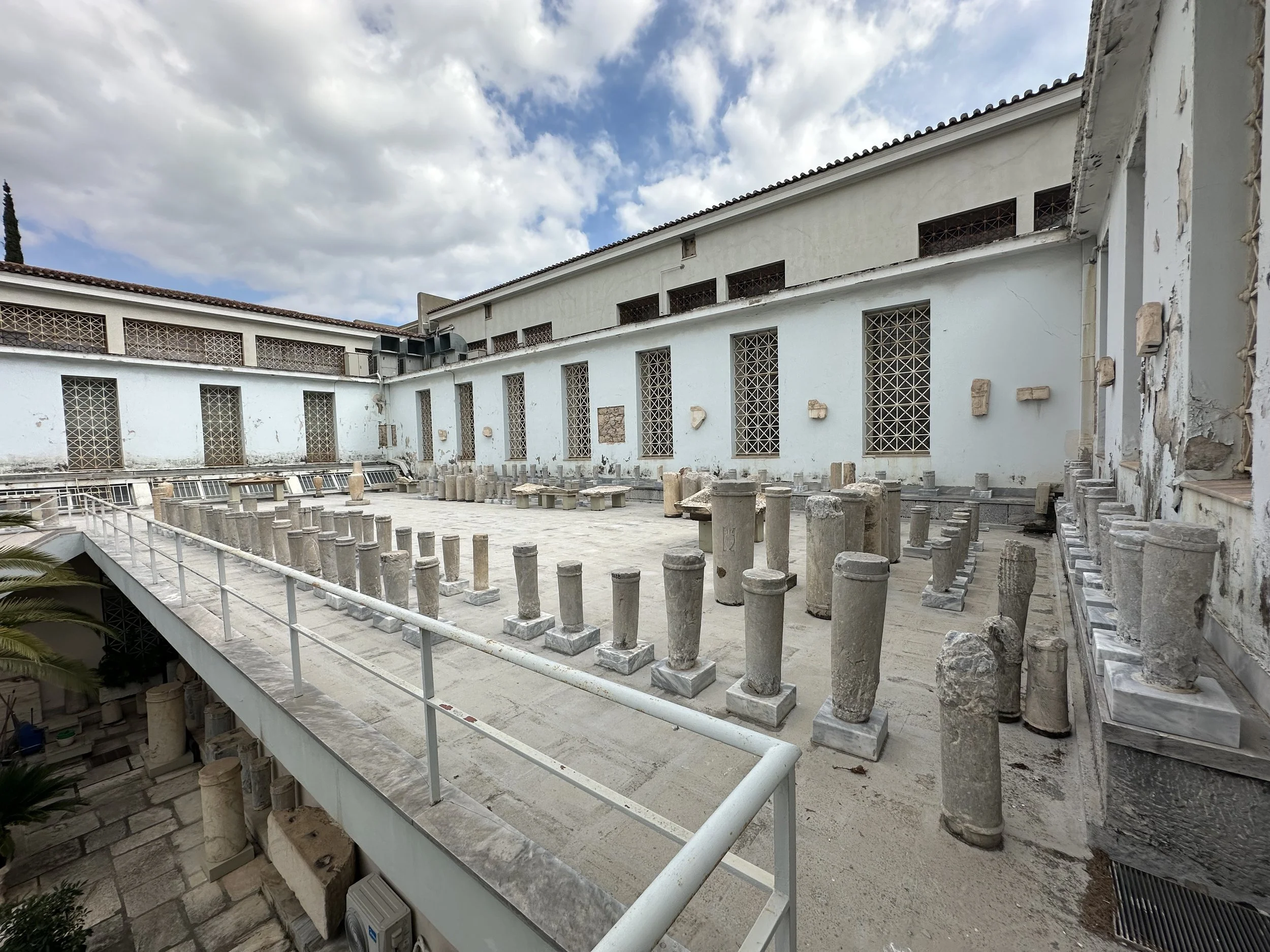
Recently I spent ten days in Athens, giving lessons, workshops, and a performance. I had a wonderful time in the wonderful city. The glorious National Anthropological Museum was just around the corner from my lodgings. Nested against it, with a separate entrance, the smaller Epigraphic Museum was no less glorious. I visited it four times during my stay.
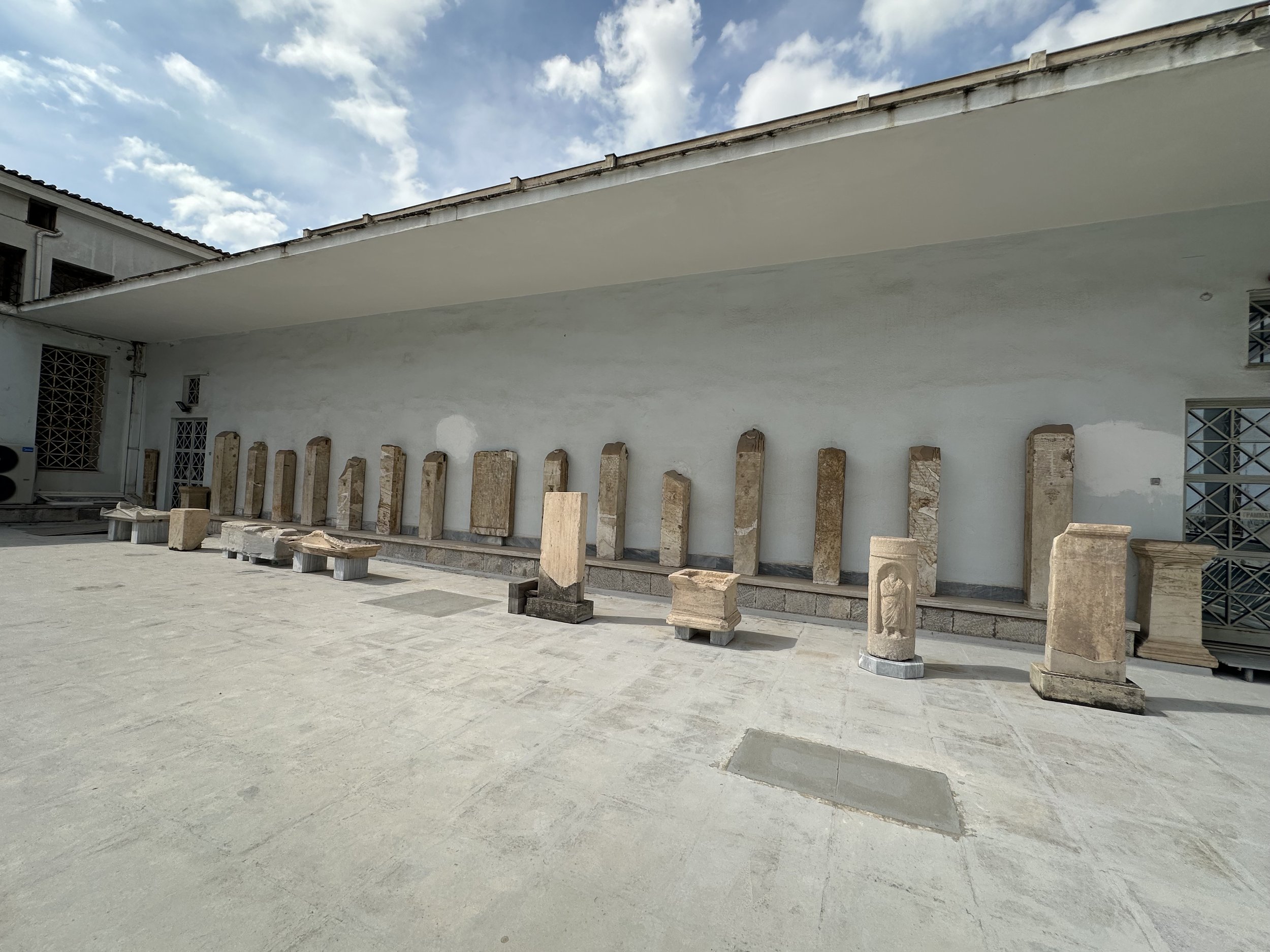
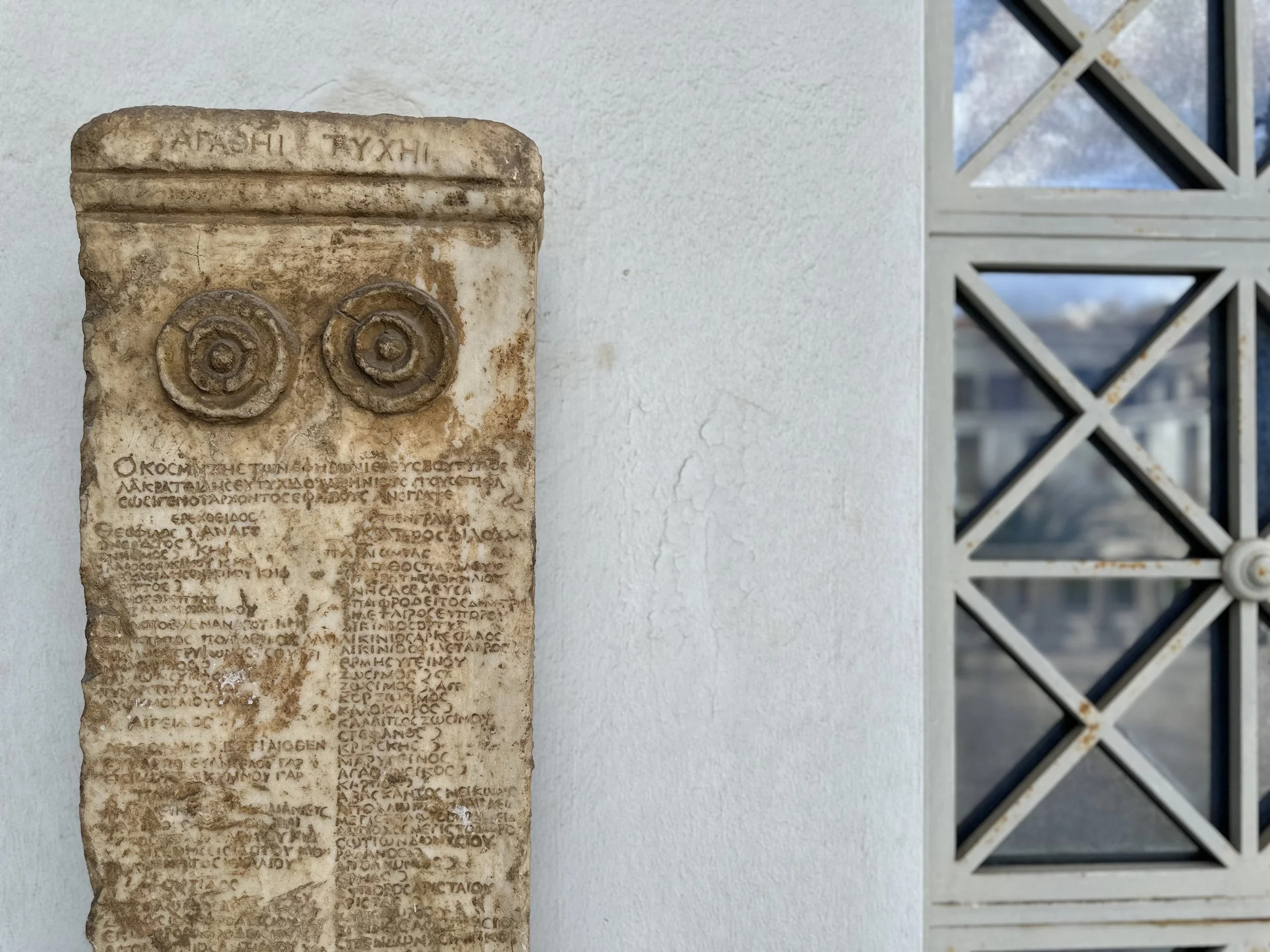
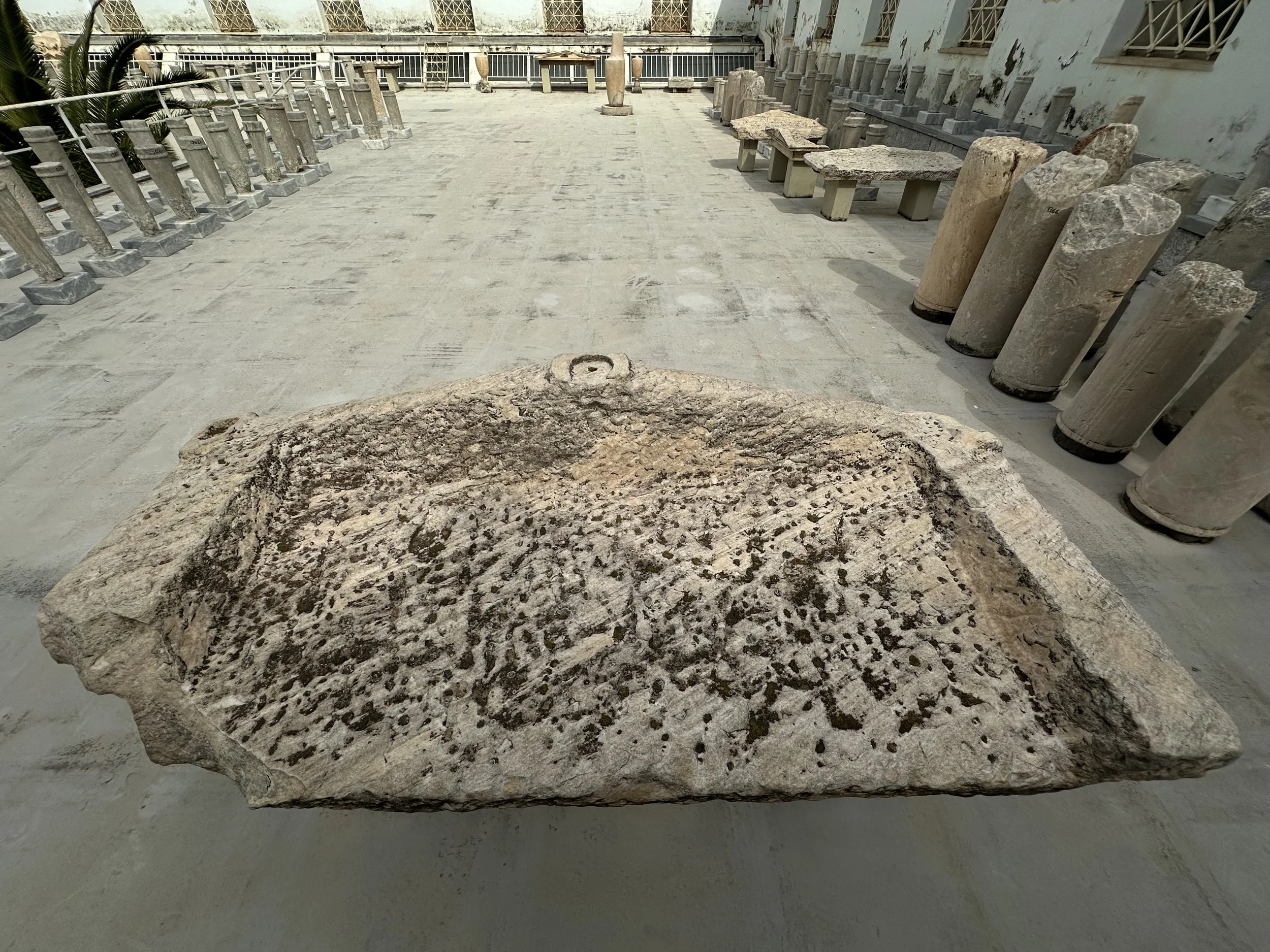
Epigraphy is the study and interpretation of stone inscriptions. The Museum has an incredible collection of beautiful stones and stele, carved with ancient texts that show the linguistic, cultural, and sociopolitical evolution of Greece starting nearly three thousand years ago.
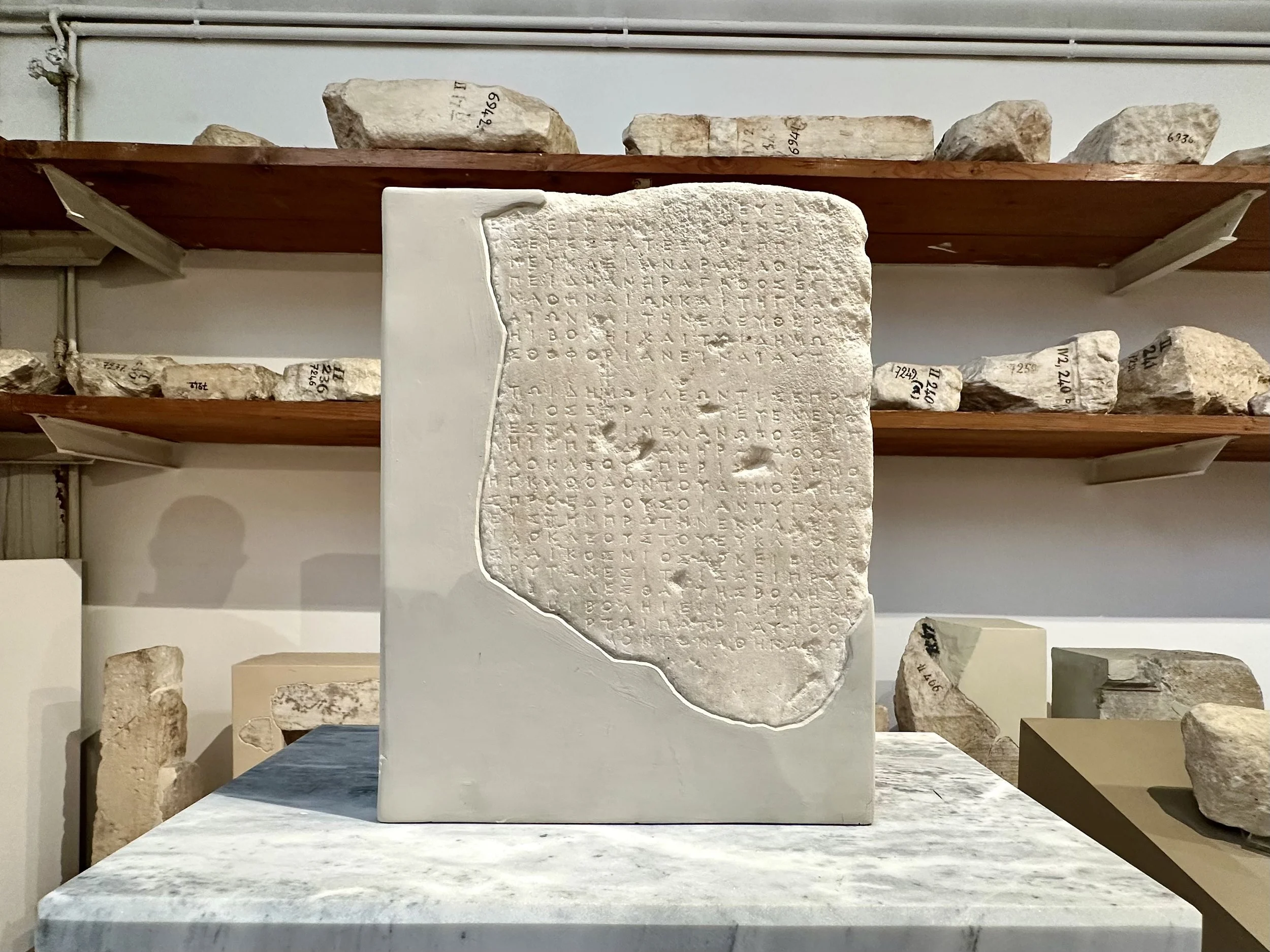
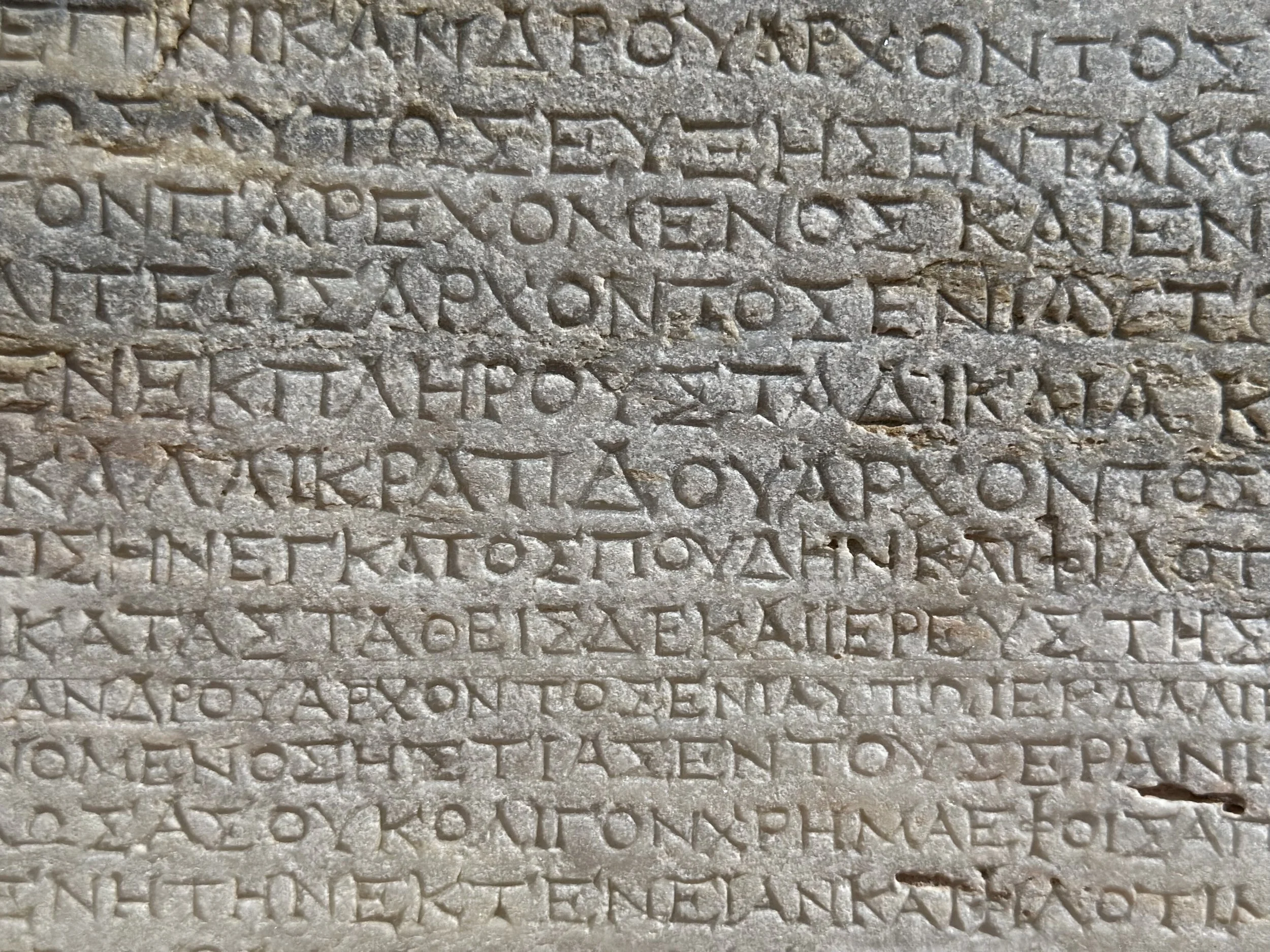
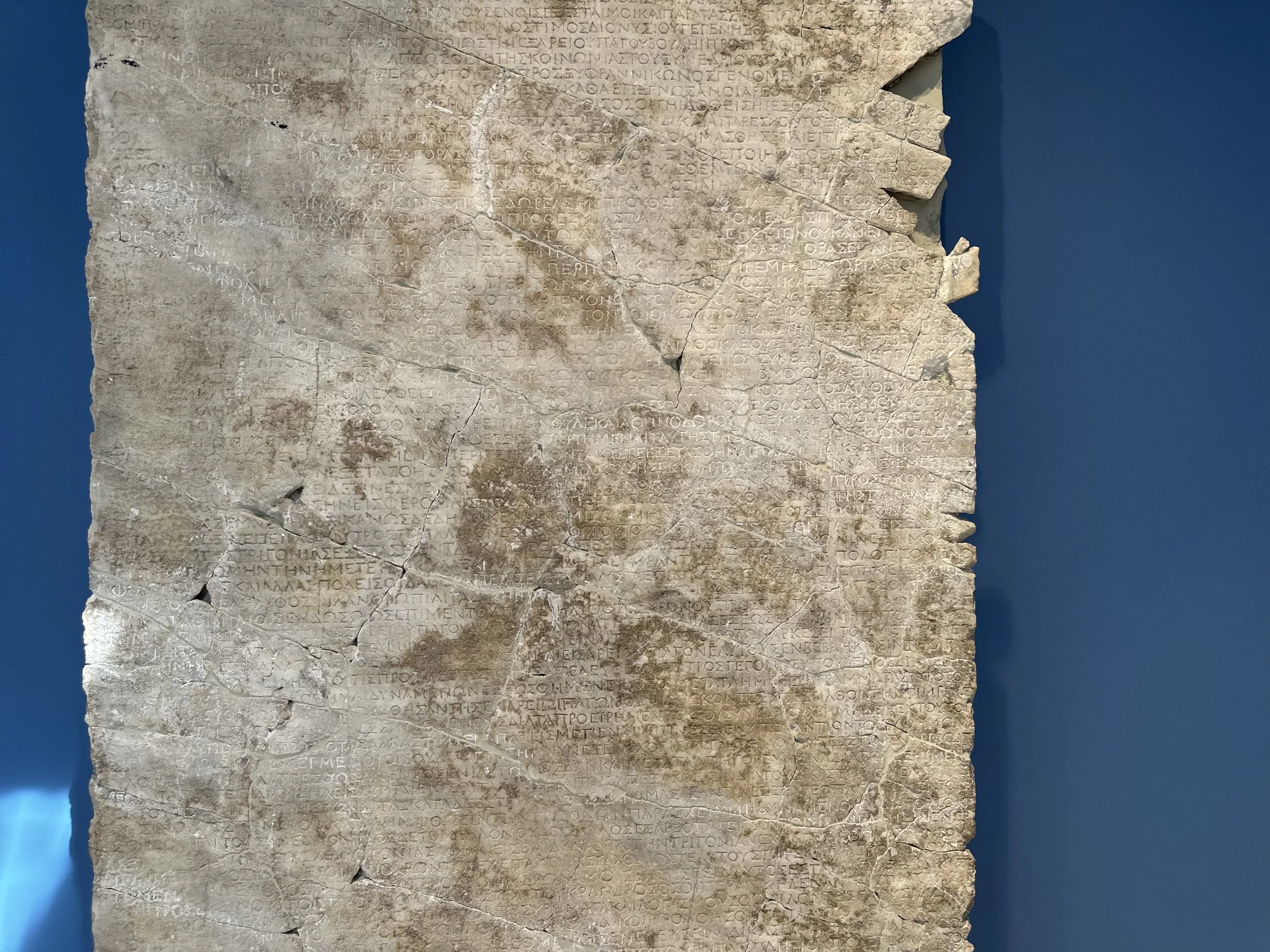
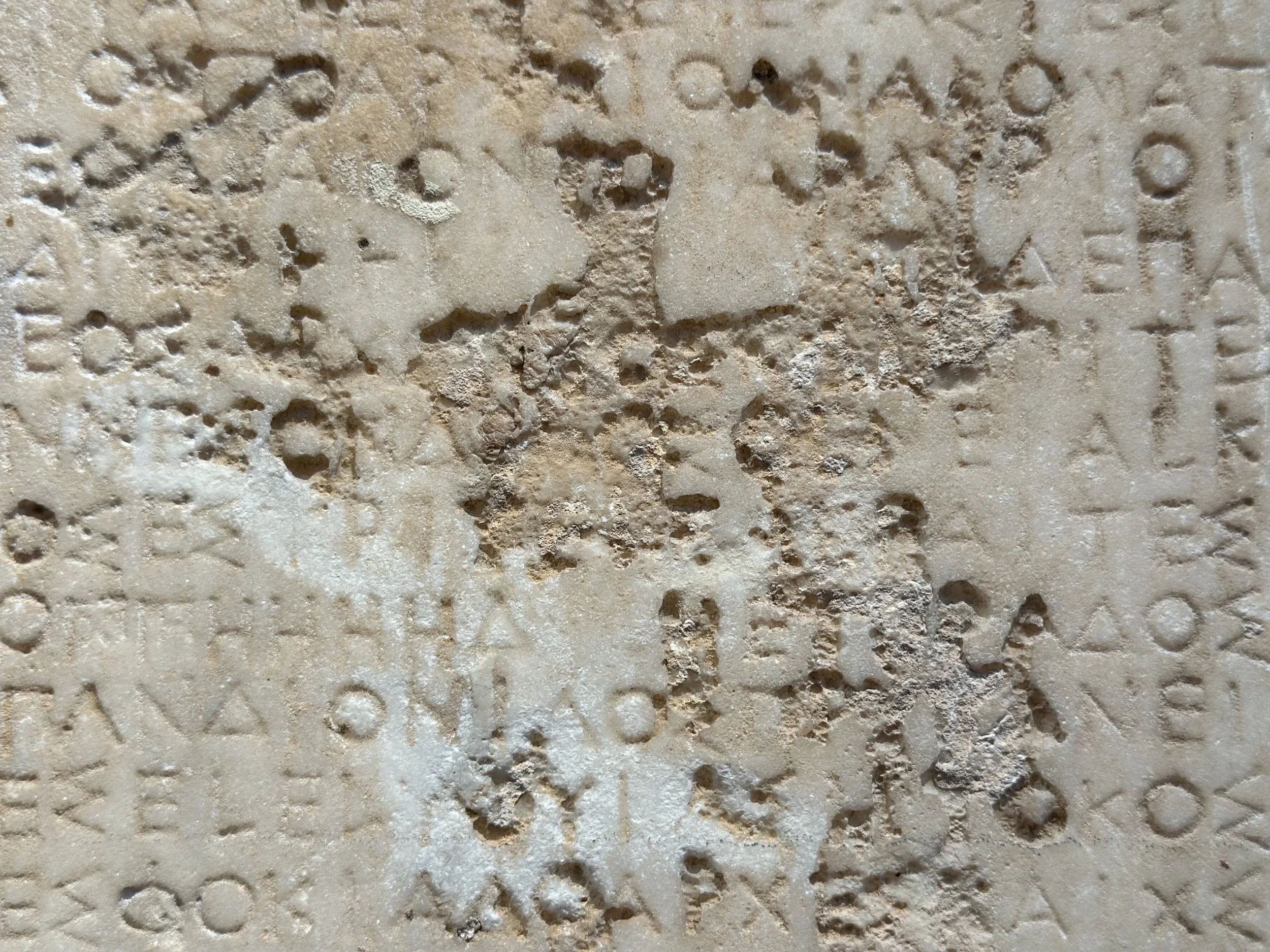
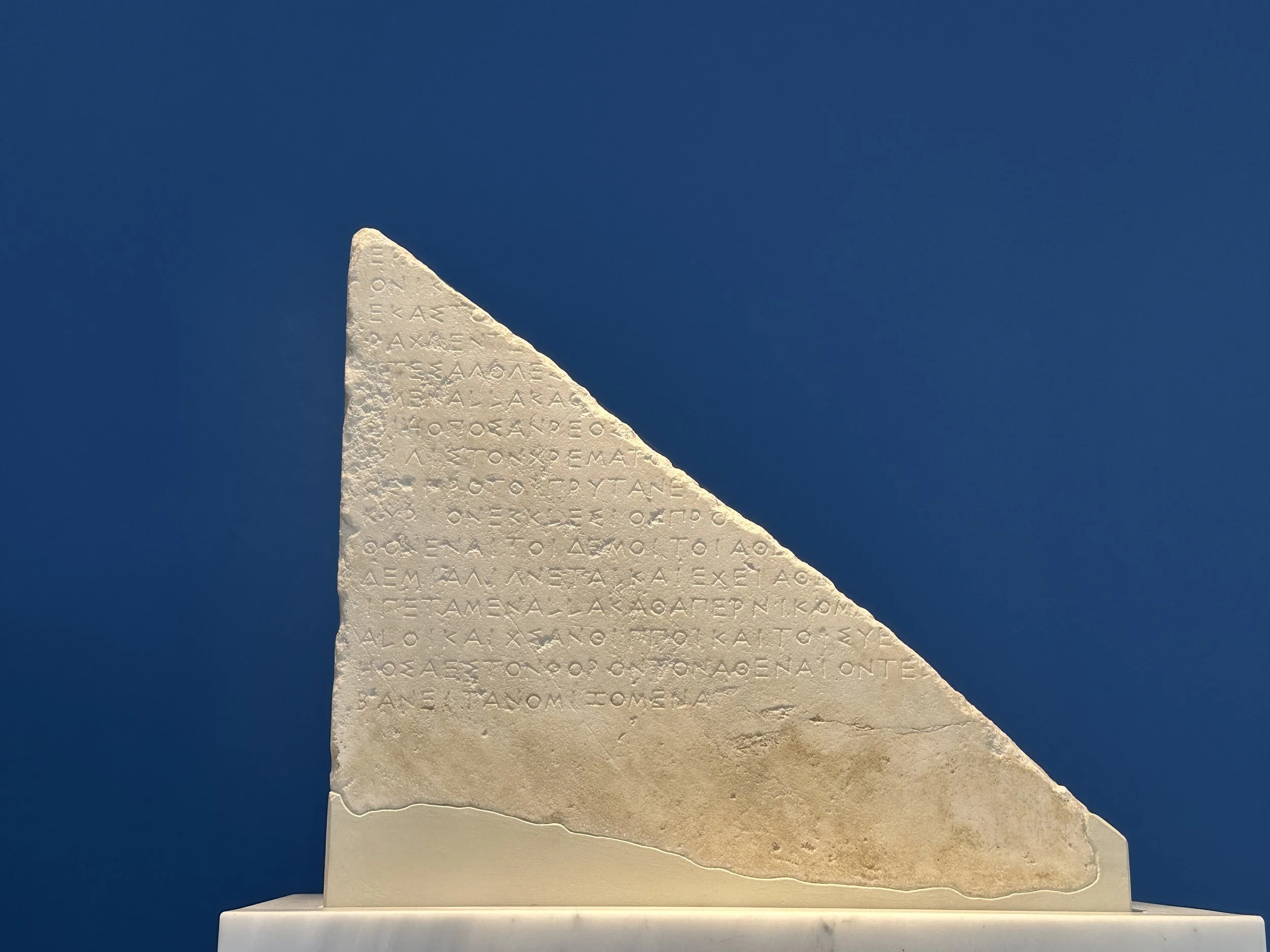
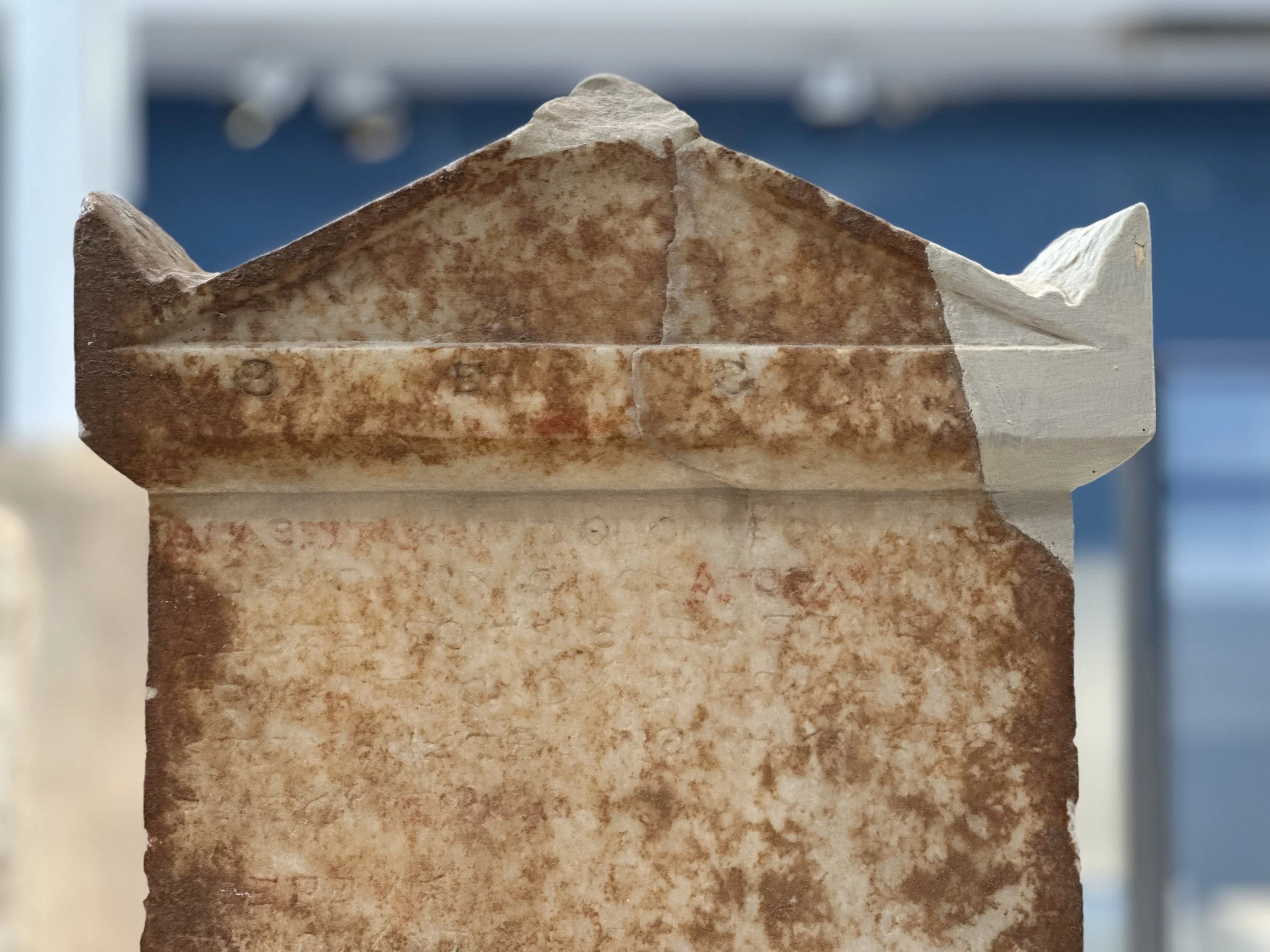
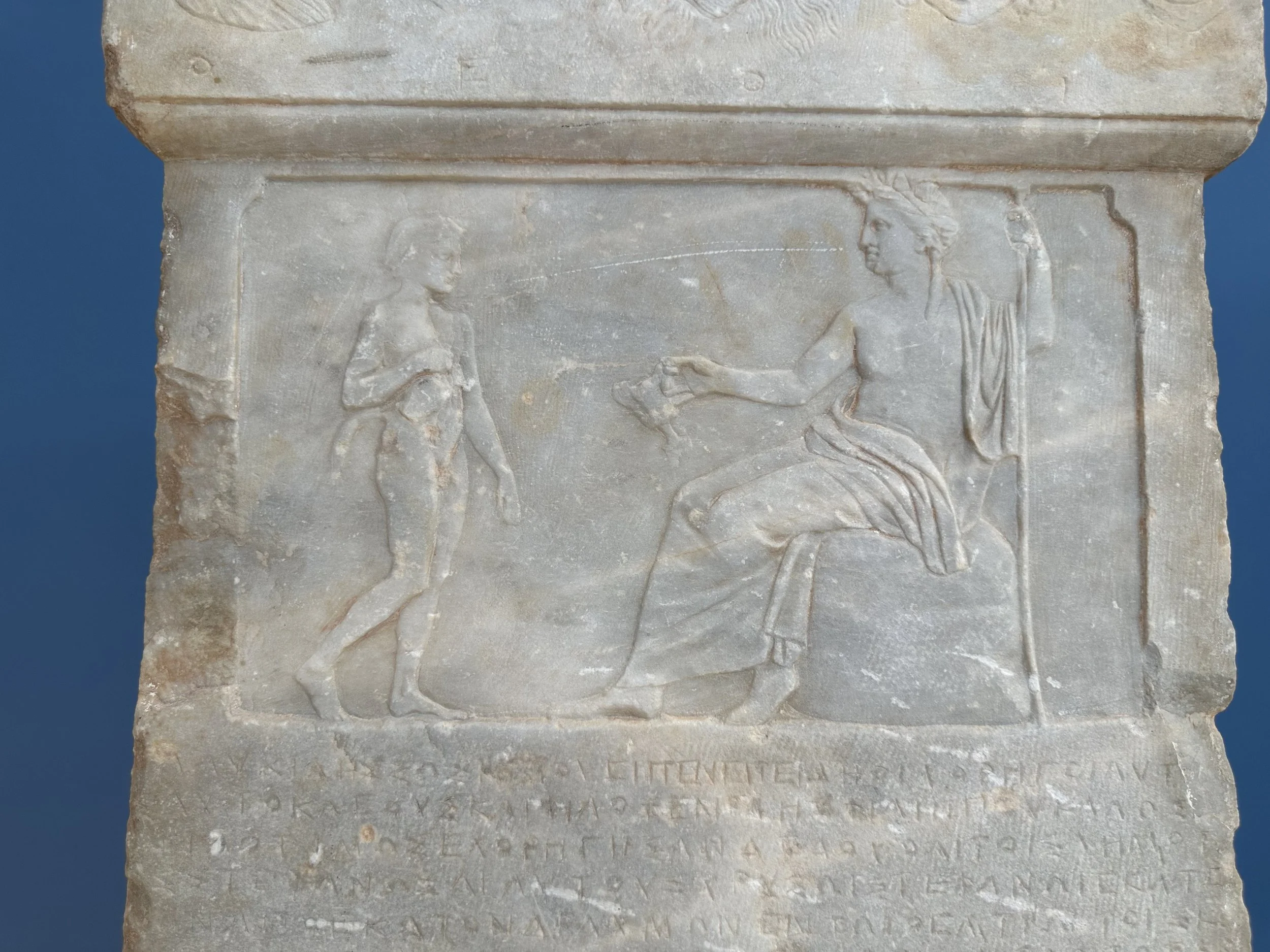
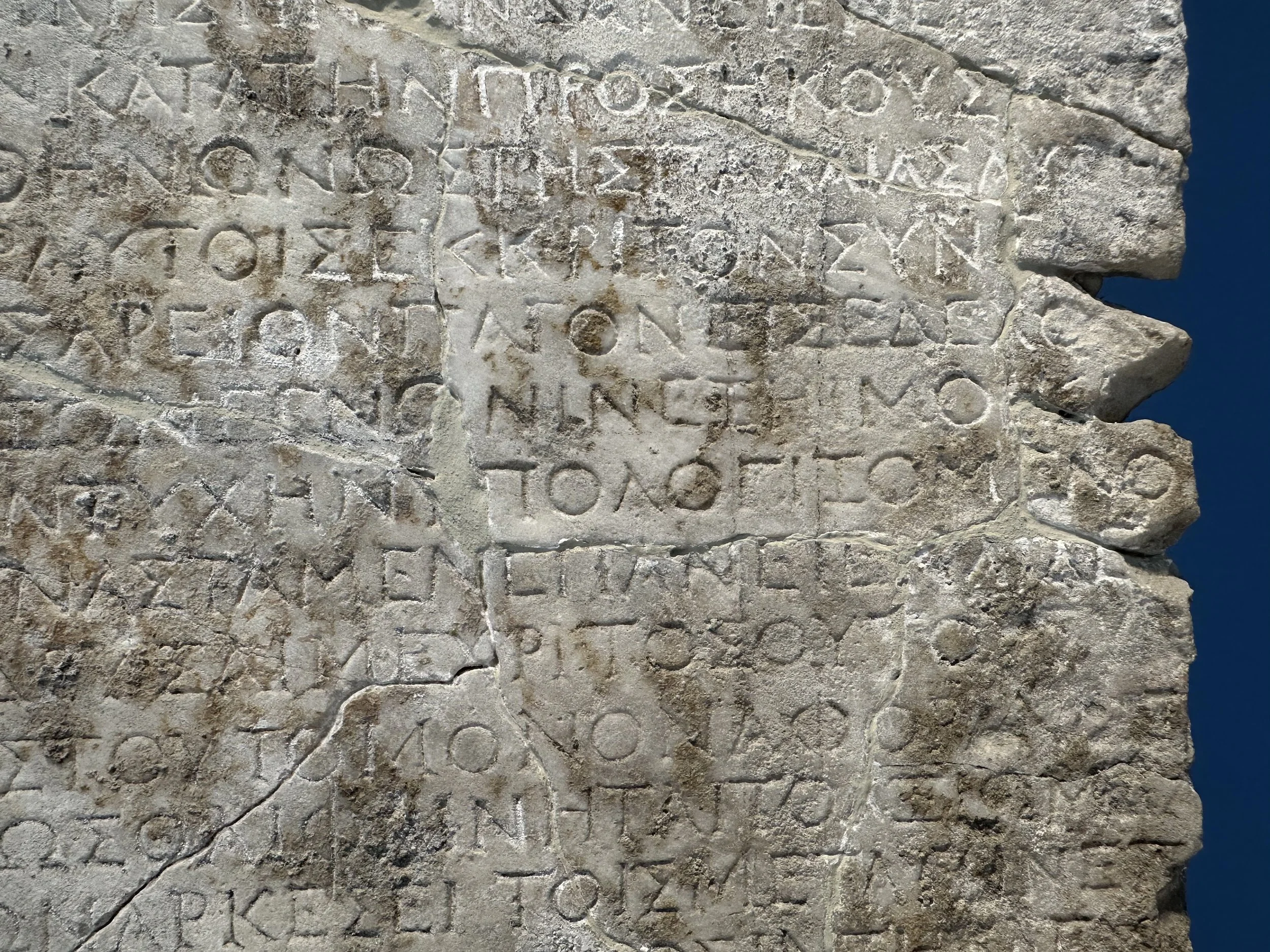
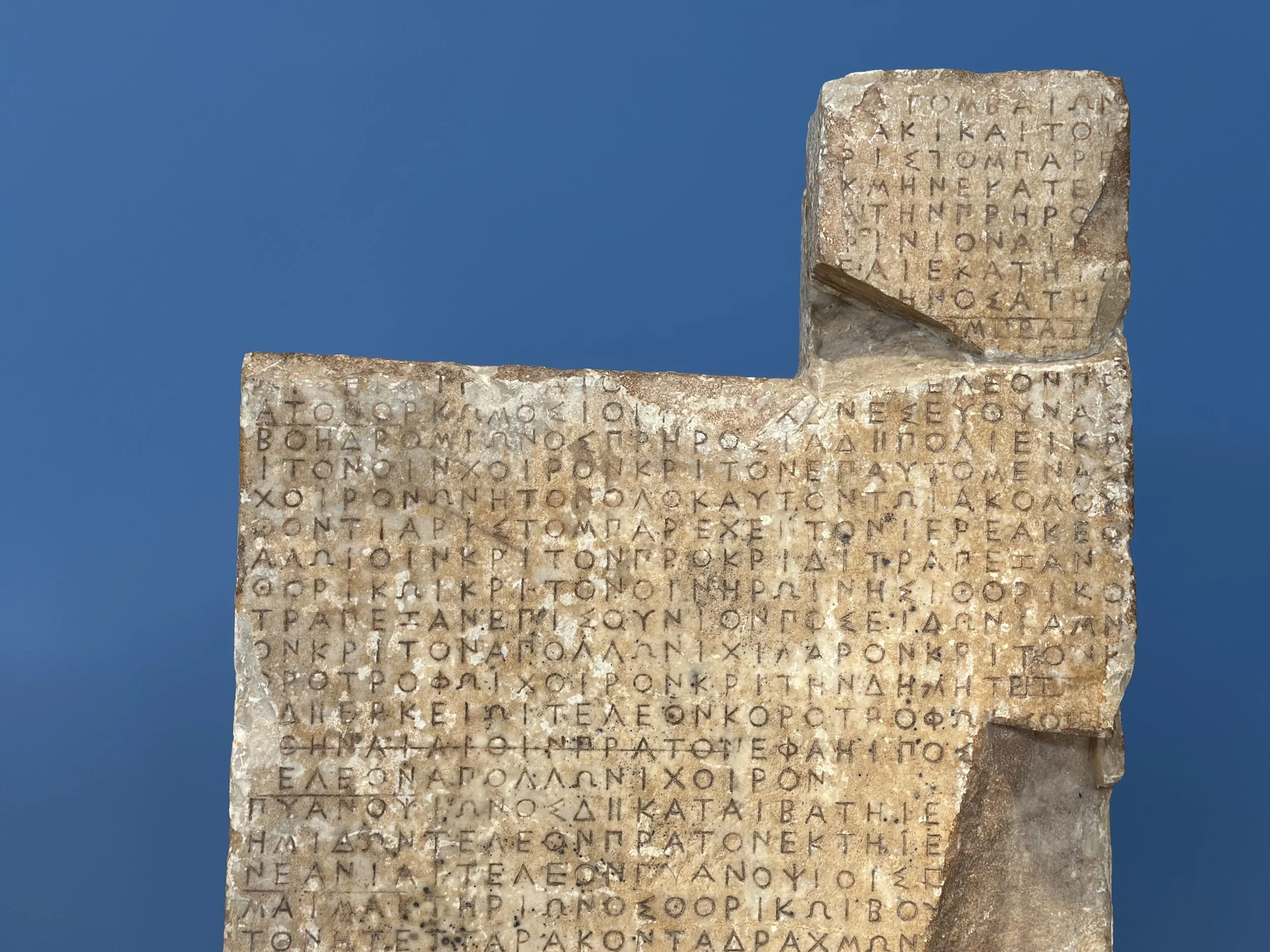
The scribes and carvers who inscribed the stones left their mark, literally. Will this blog post here survive for two or three millennia? Predicting the future is an uncertain art, but I’ll go ahead and predict that in two years (let’s not mention the millennia again) this blog post will have sunk into oblivion, together with much of everything that we’re all doing right now.
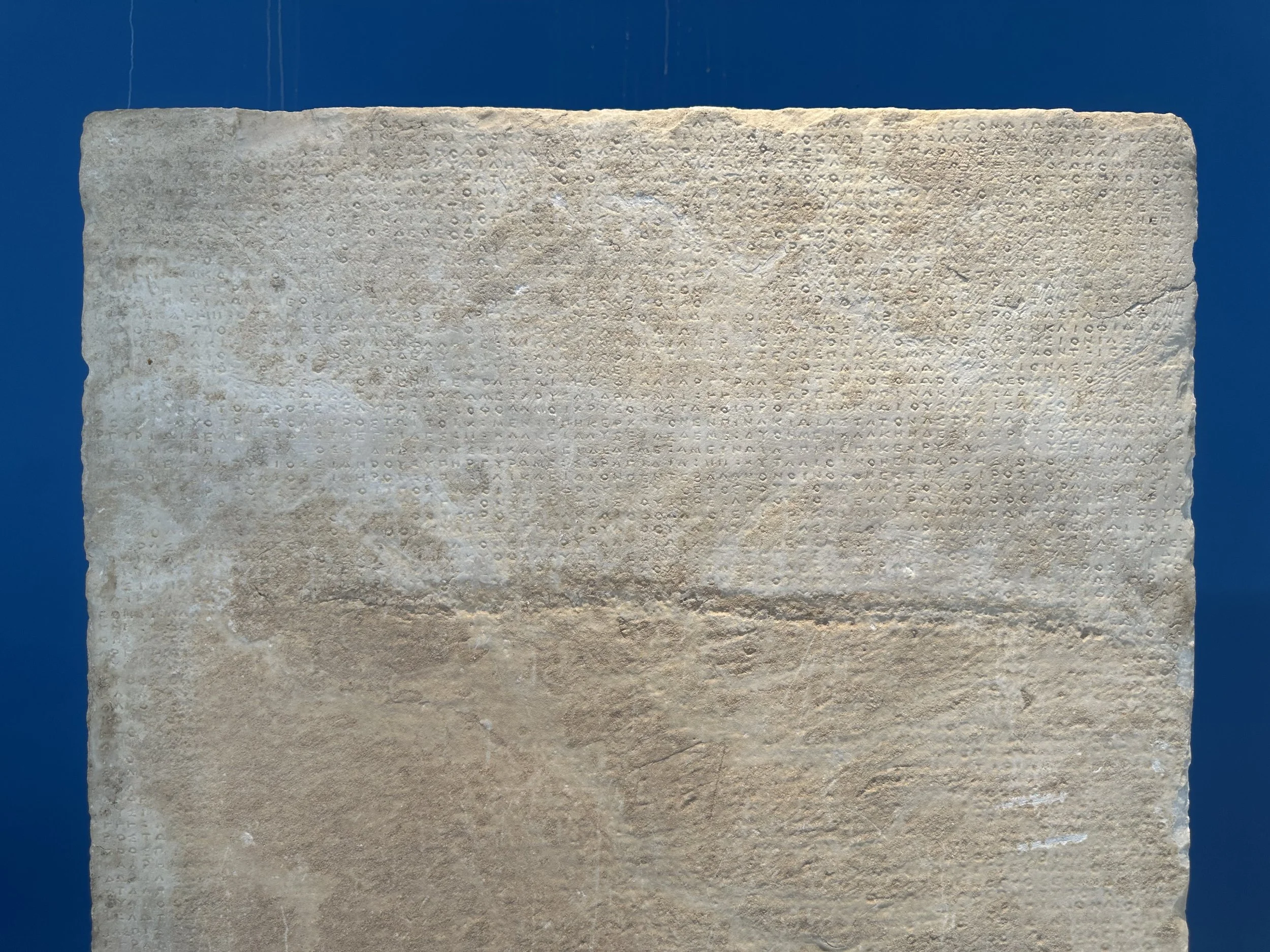
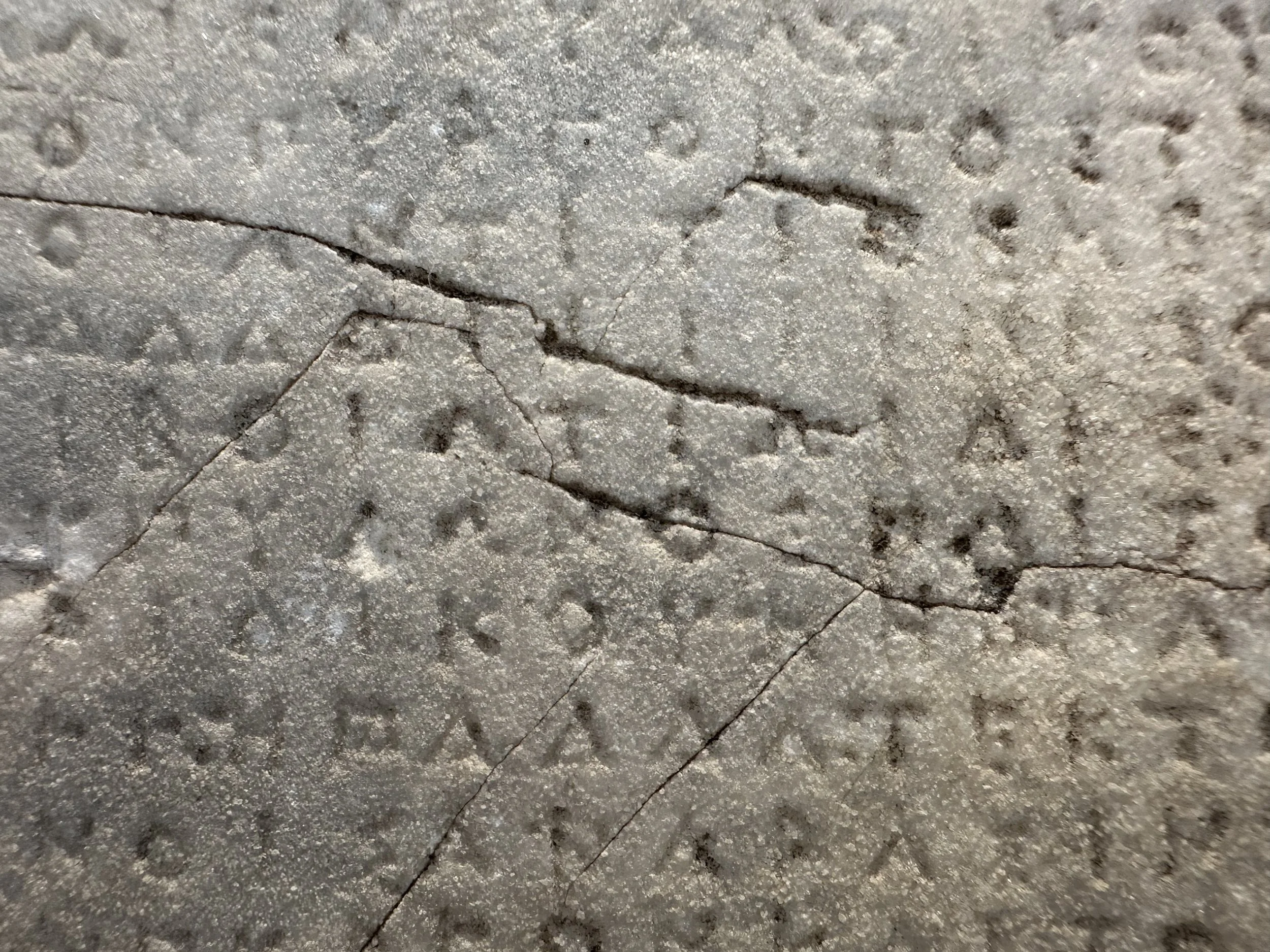
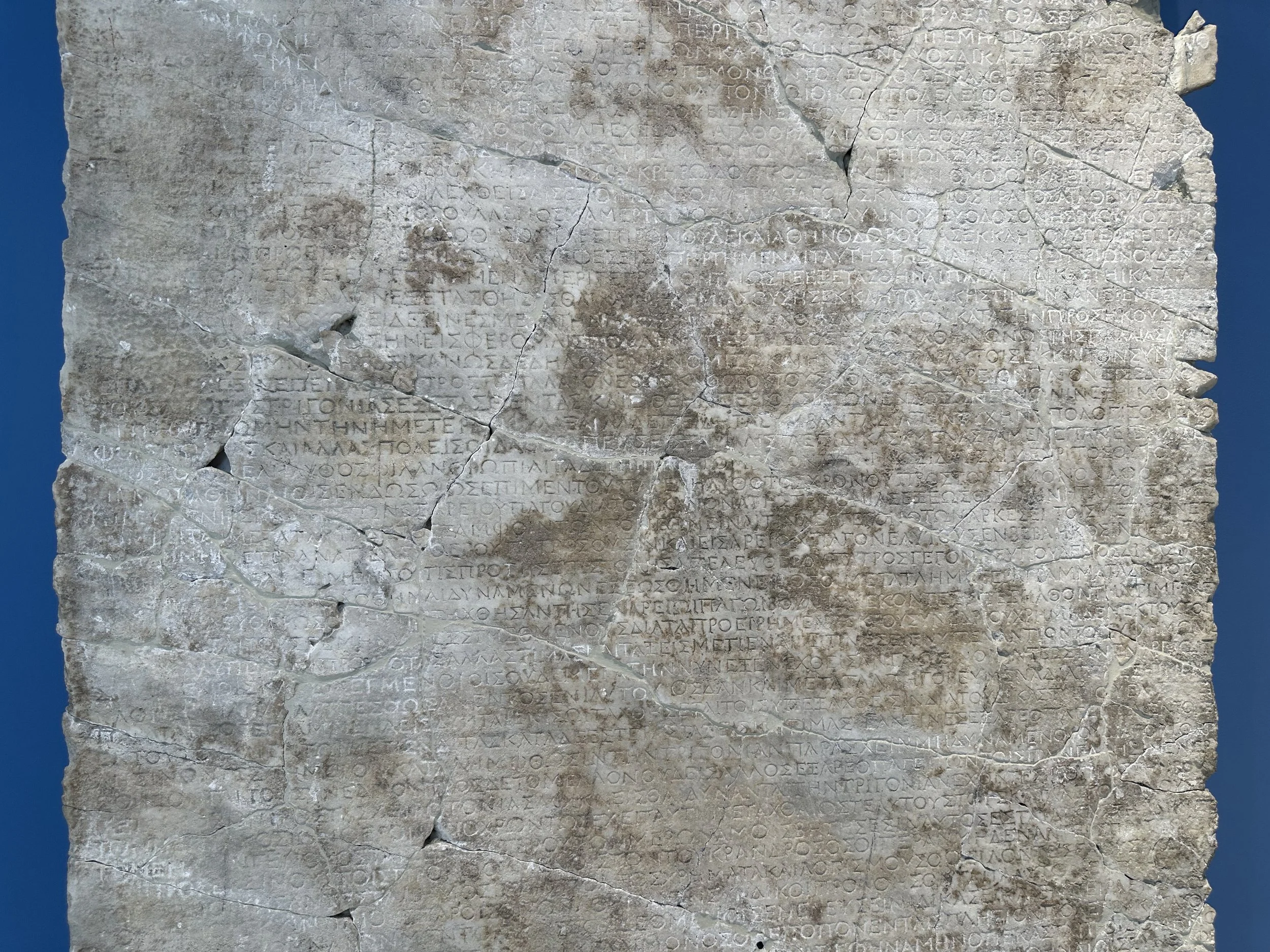
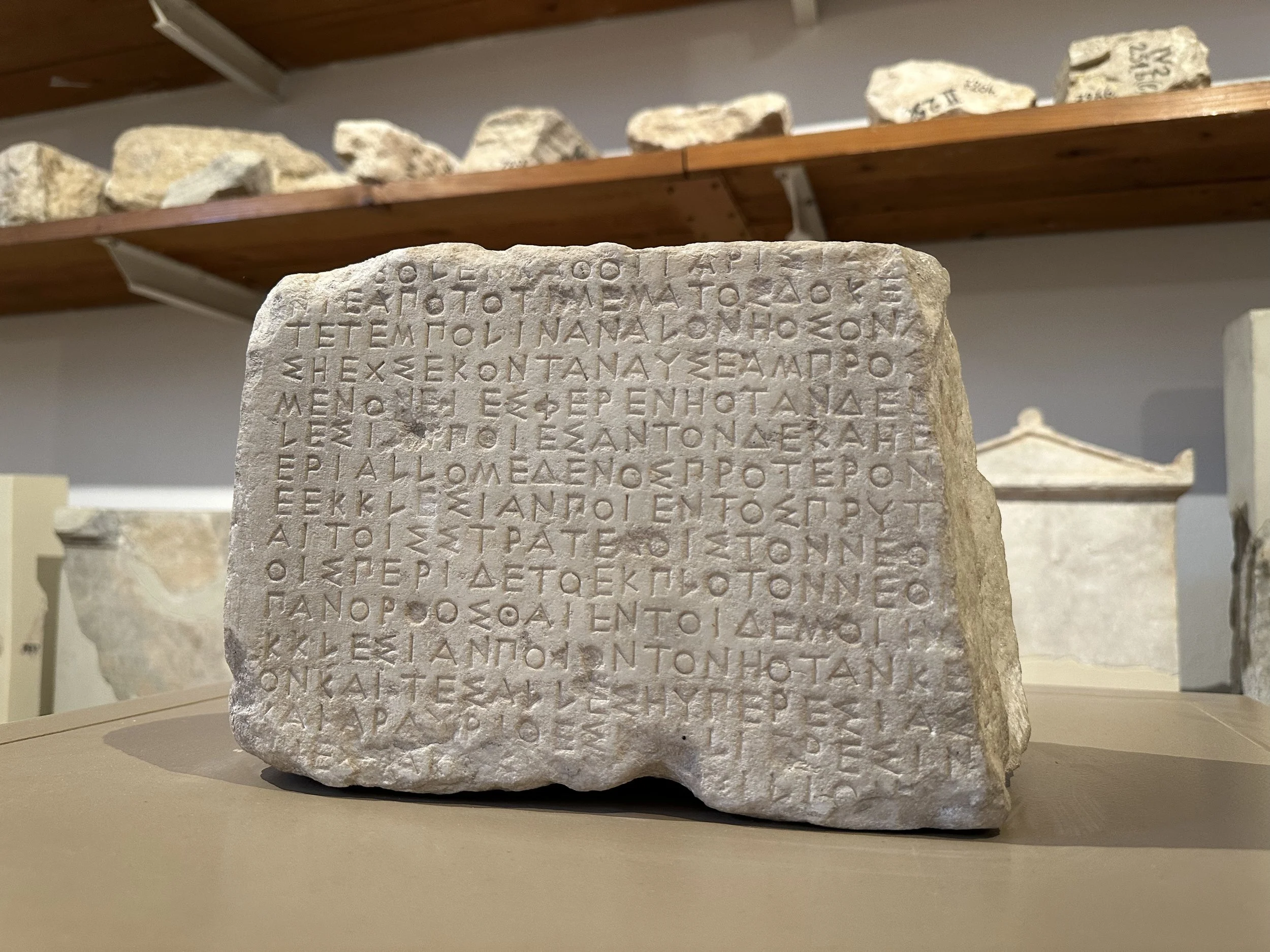
You don’t have to read a word of Greek to appreciate a carved stone as a thing of exquisite beauty. Any stone represents all stones. At the Epigraphic Museum I “saw” Isamu Noguchi and Constantin Brancusi, I “saw” every tombstone in every cemetery I’ve ever visited, I “saw” every child who ever collected pebbles at the beach. Every stone eternally sings the Song of Stone. The Epigraphic Museum isn’t as silent as you think at first.
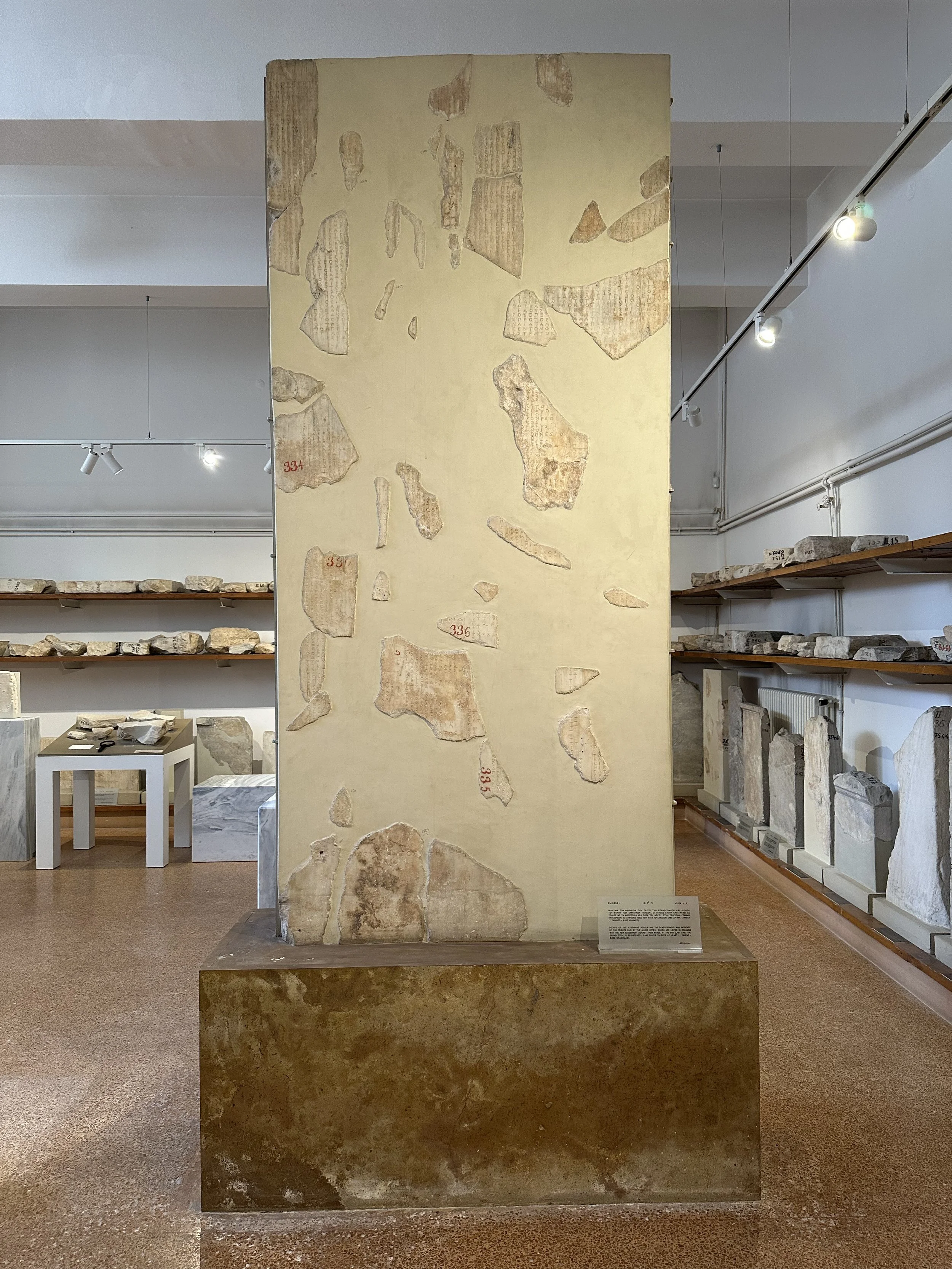
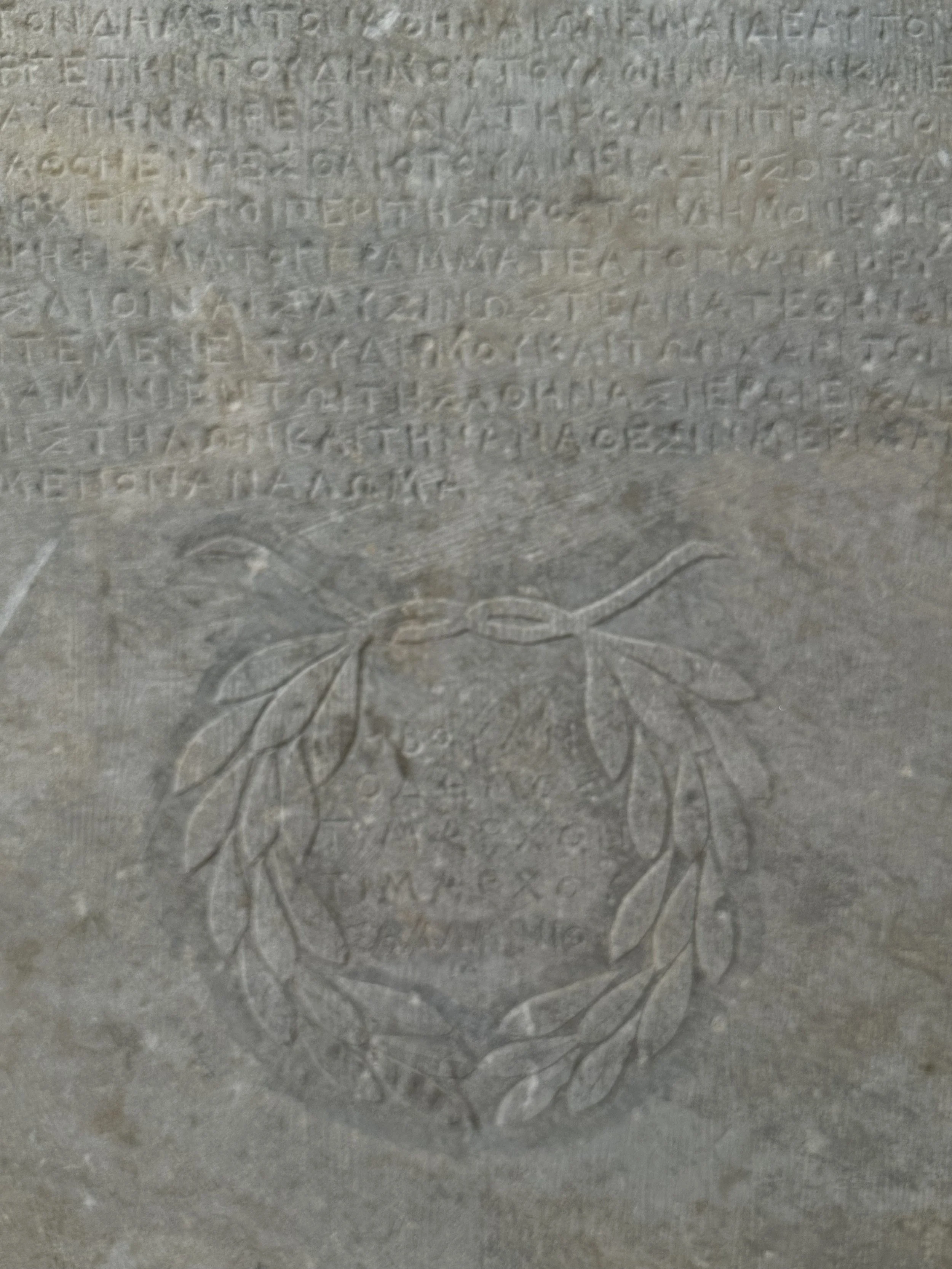
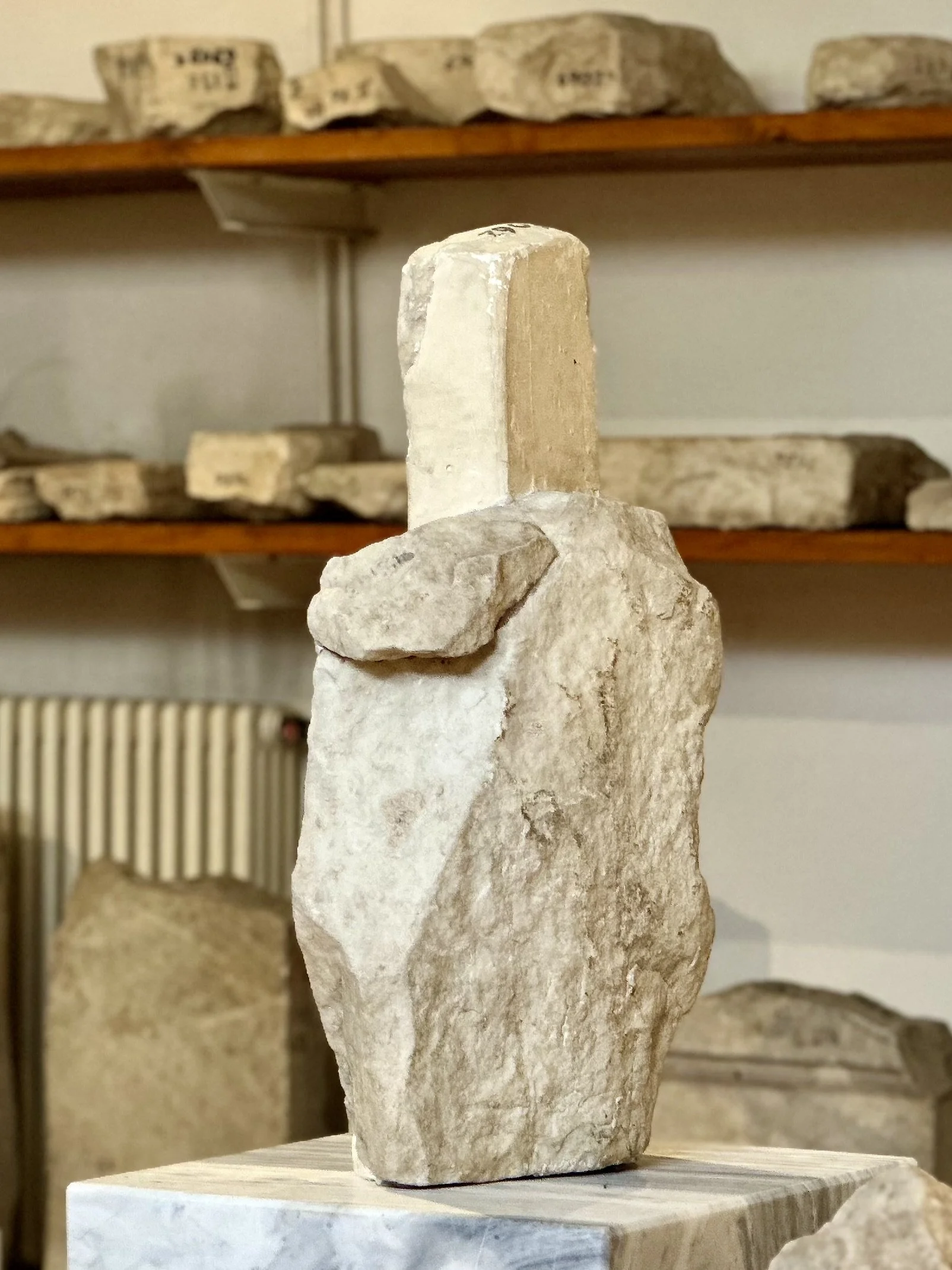
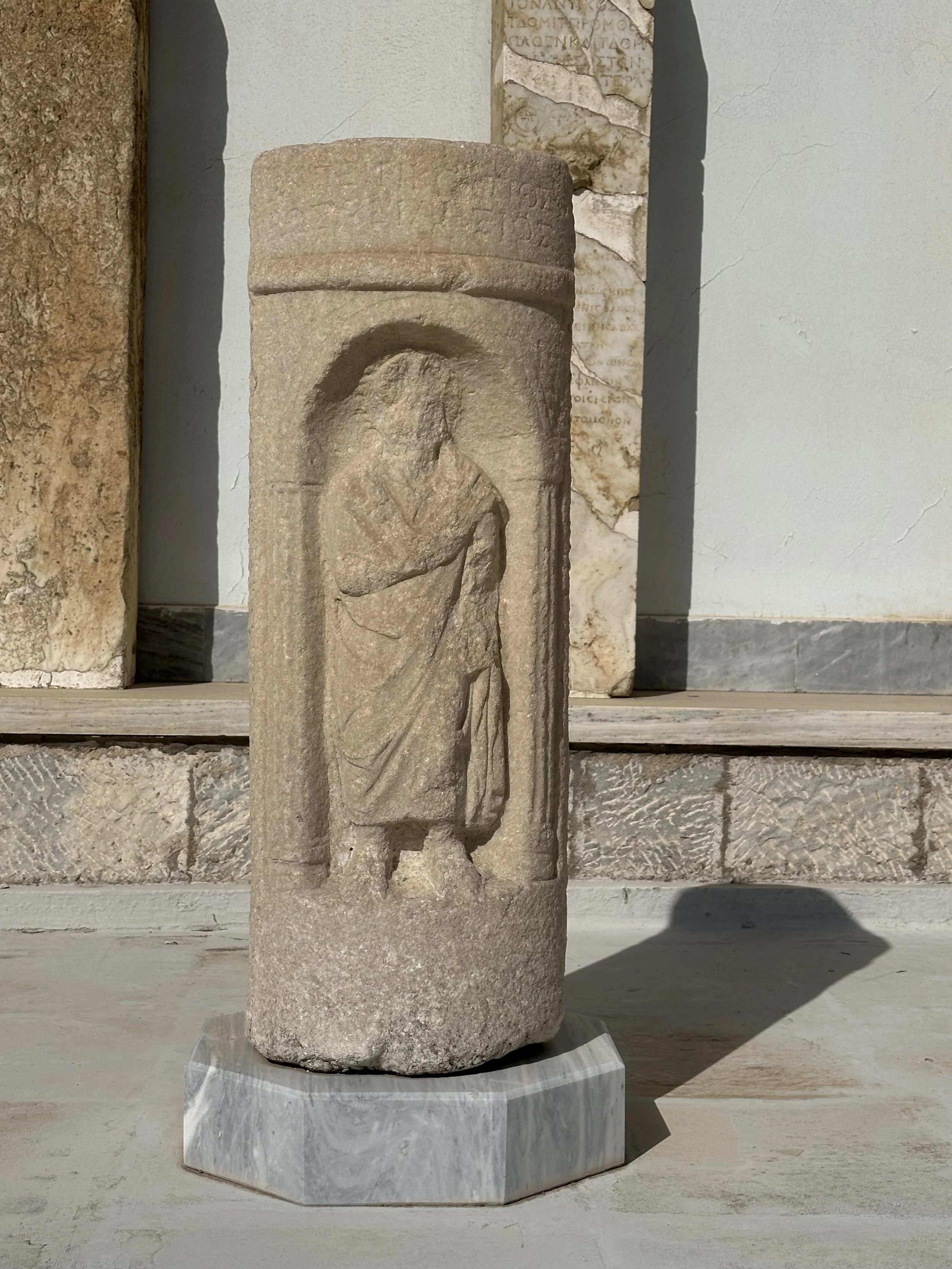
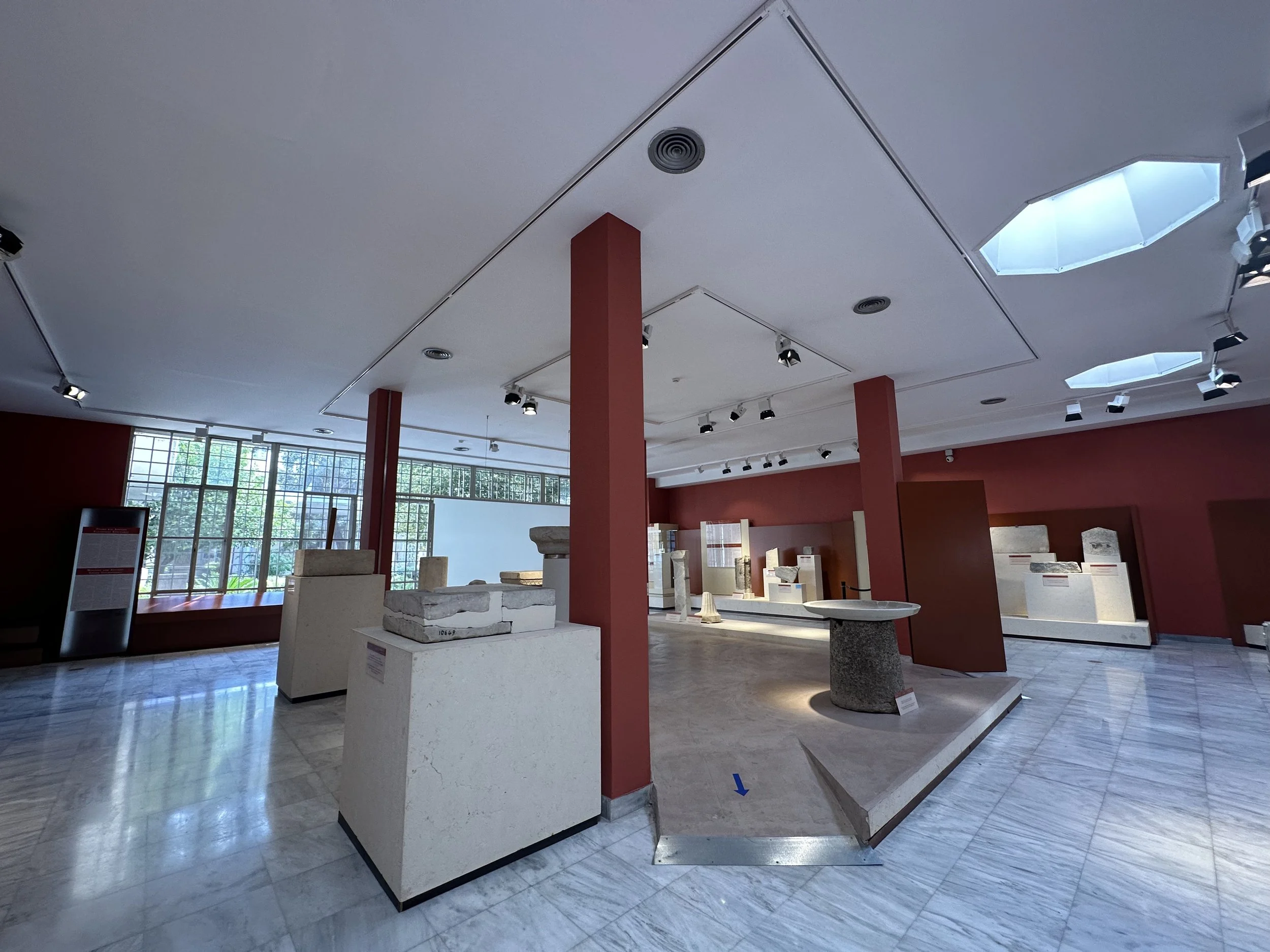
My wife came with me on my first visit to the museum, but after a while she had to leave to go to work. Then I found myself alone; completely alone; I was the only visitor in the entire museum. On two of my subsequent visits, I again was completely alone. On my fourth and last one, I witnessed a group of schoolchildren rush through the galleries. In front of an exhibit showing the evolution of the Greek alphabet, the children recited the alphabet out loud. They quickly exited the museum, and I was by myself again. Being alone in an astonishing environment, often in the middle of a bustling city, has long been a regular feature of my life. One day I’ll try to tell you more about it.
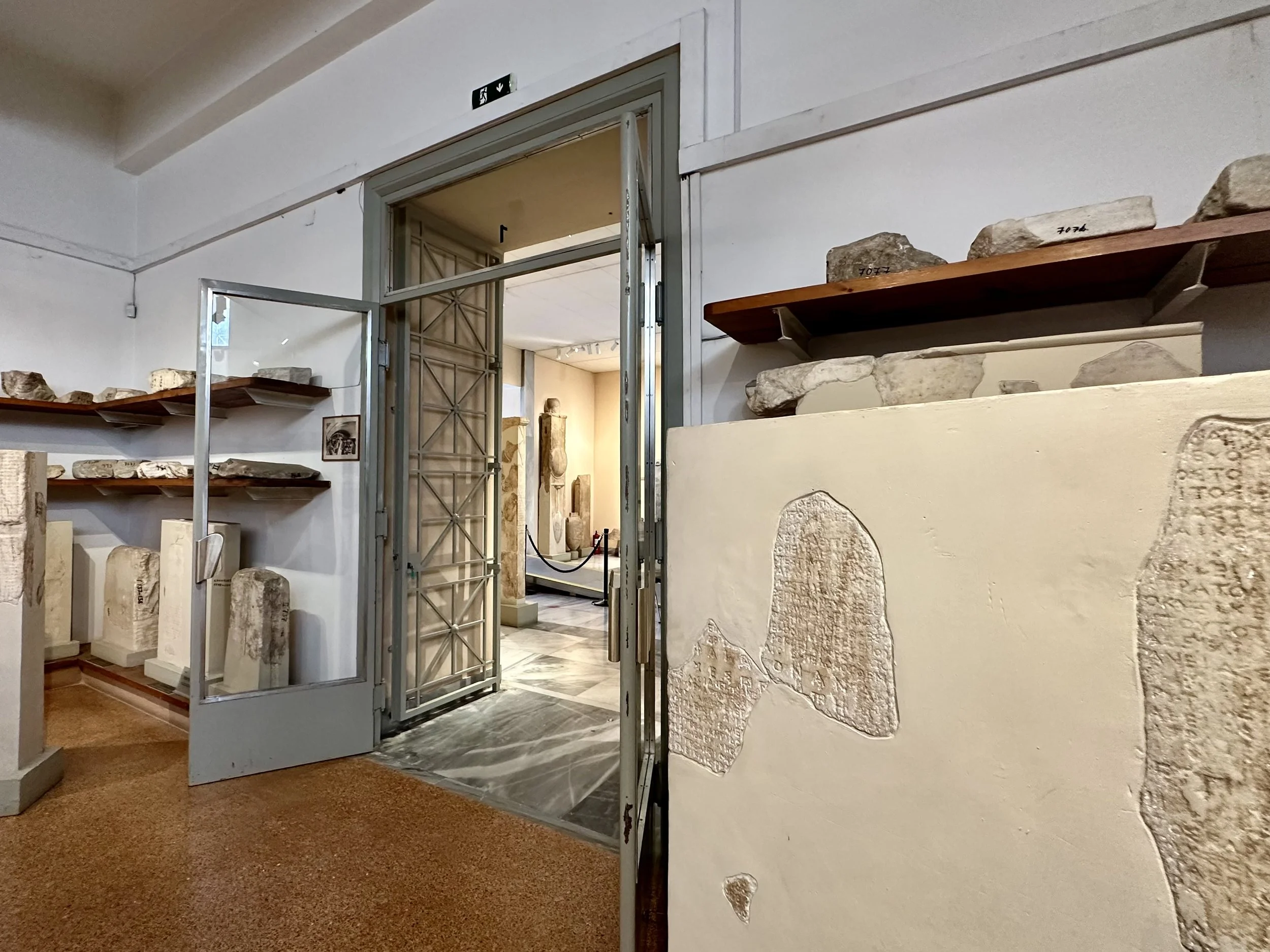
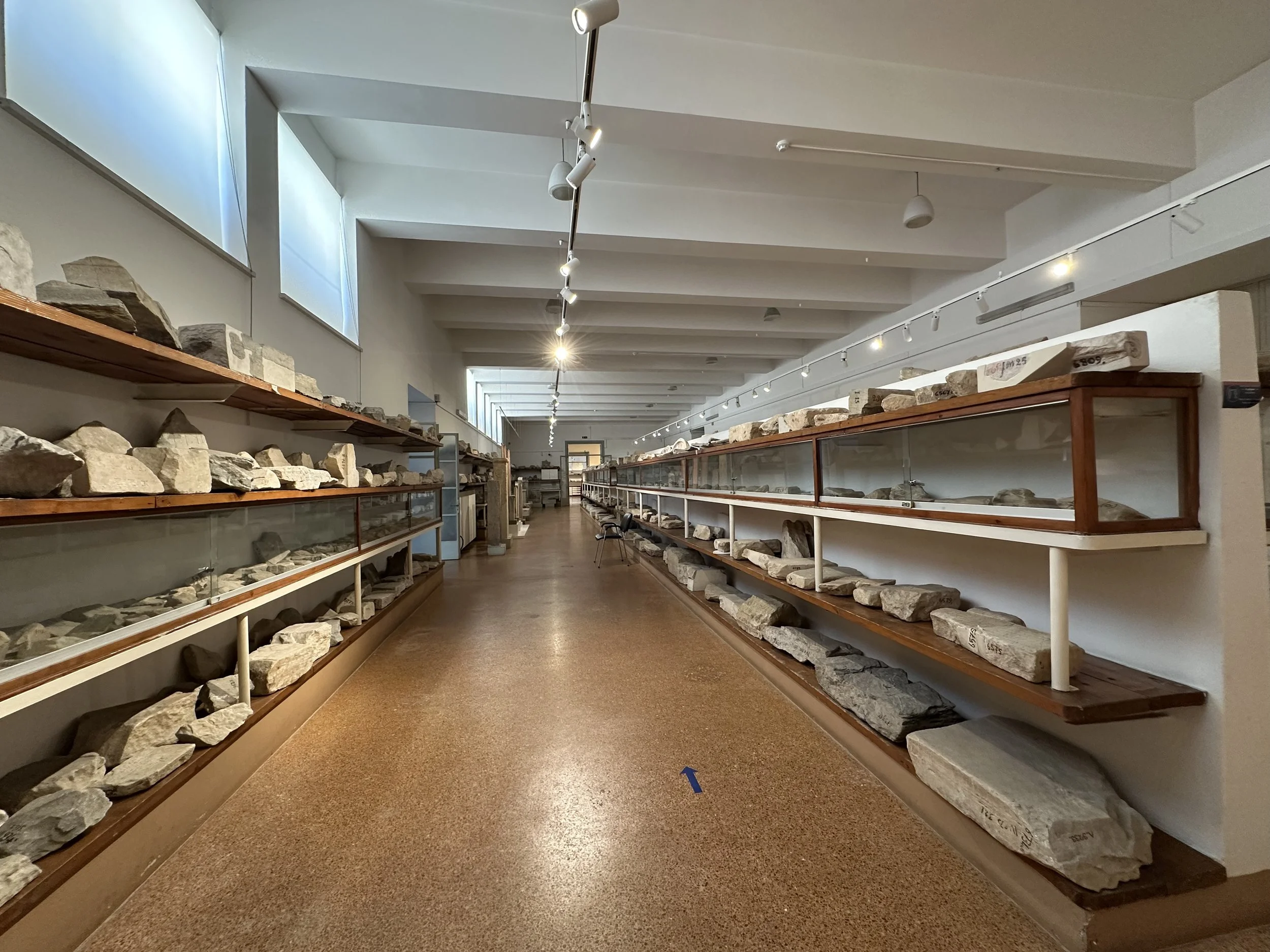
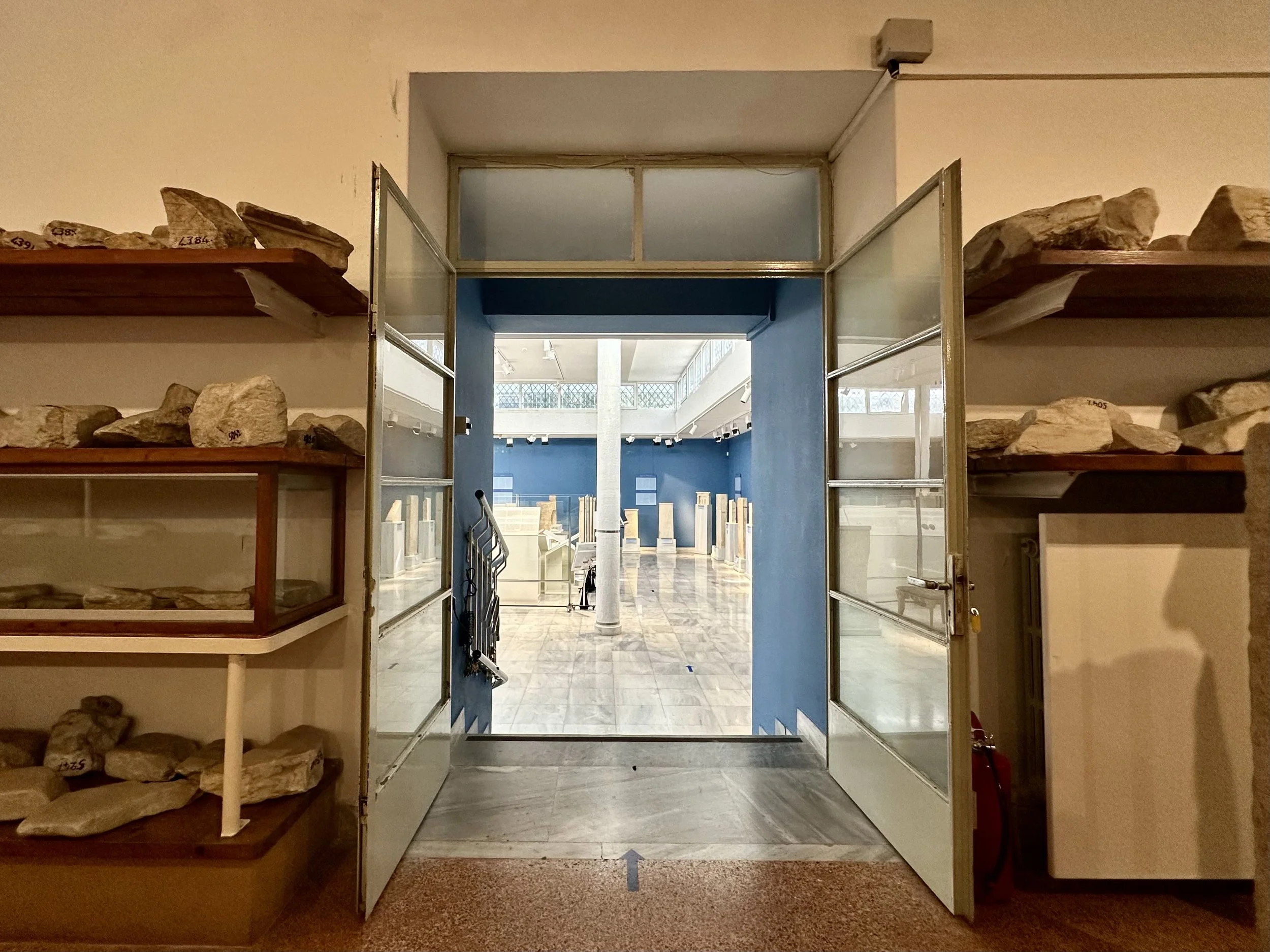
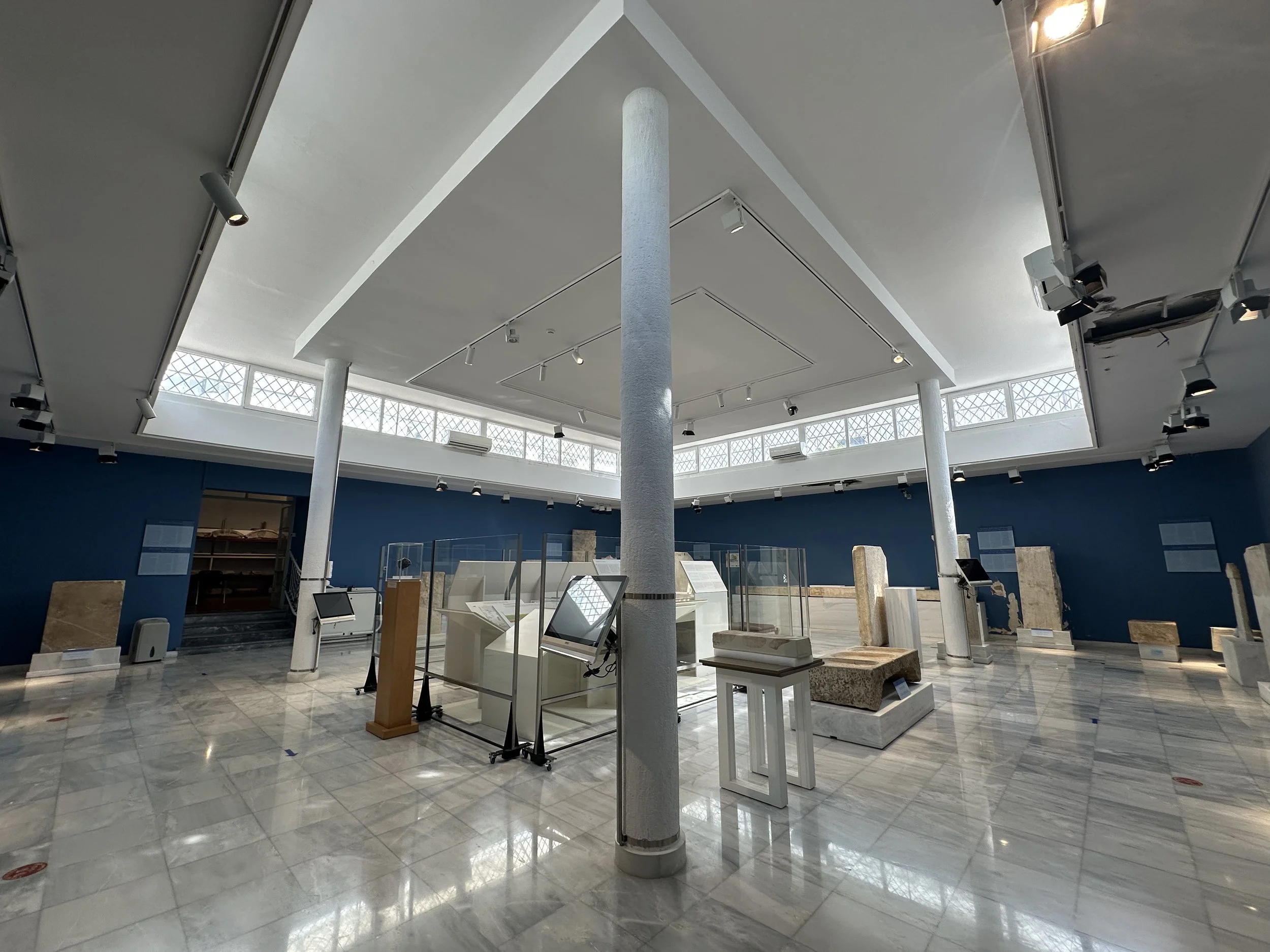
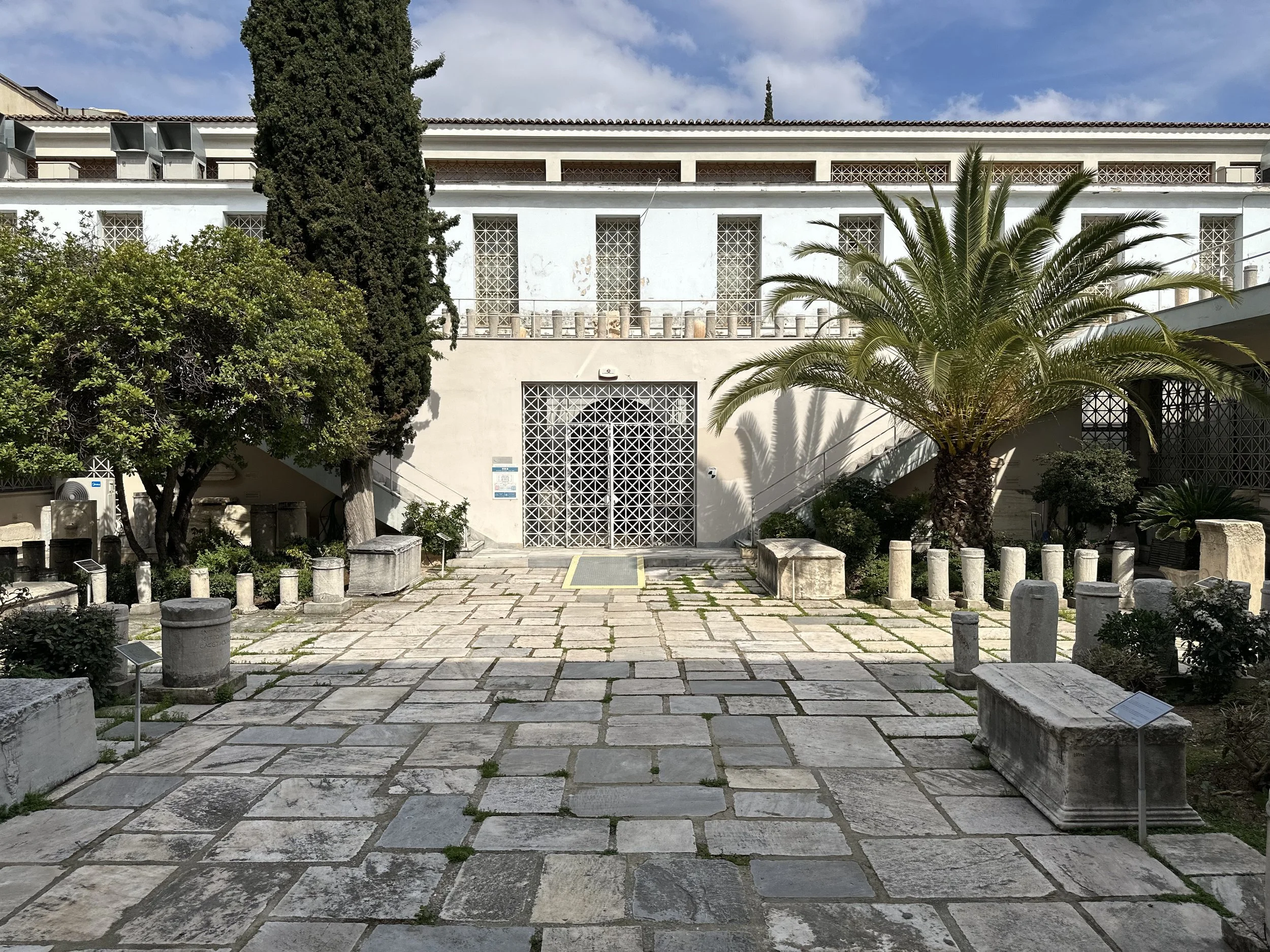
The museum workers (there were three of them) became intrigued by my presence. Two of them barely spoke foreign languages, but they weren’t bothered and spoke to me mostly in Greek. During my last visit, one of the workers approached me and said, “Come.” And he walked me through the storerooms and conservation workshops, which are behind locked doors and out of bounds for visitors. The workshops were bigger than the museum, crammed with artwork, work benches, tools, incalculable riches normally hidden from view. It was just the two of us in there, the stranger and the threshold guardian. The stones were singing, and we were dancing.
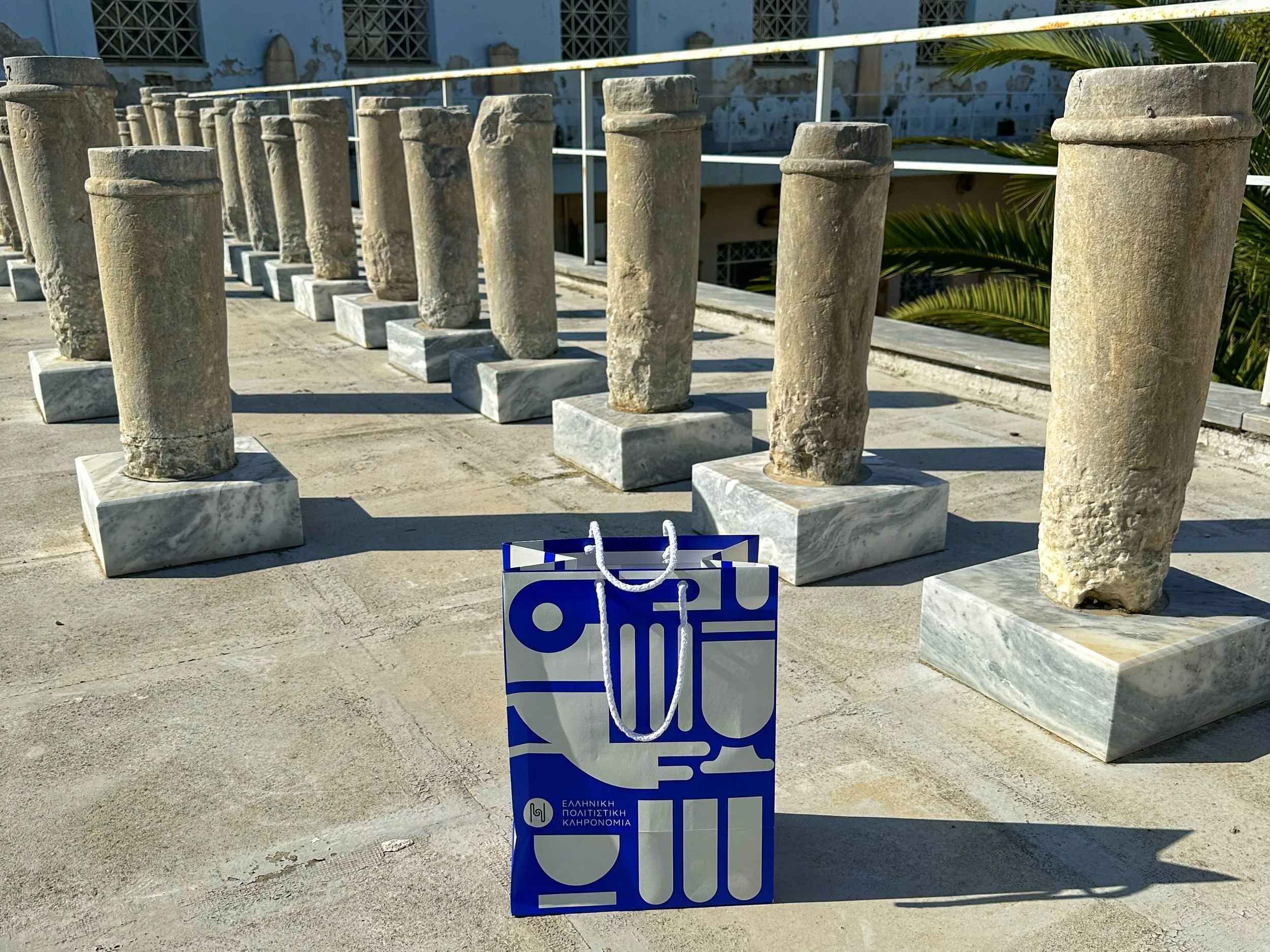
Afterward, another of the workers approached me and gave me a book from their stash. I mean, a gift; for free, offered with love and a smile. A moment later the worker gave me a gorgeous bag for my gift. And later again, the worker gave me a second book. A worker who spoke English then engaged me in conversation. She seemed a little puzzled that someone, anyone would keep coming back to the museum so many times in such a short period. “Are you some sort of professor?” she asked.
I babbled. You can’t ask the happiest boy in the world to explain his professional and creative identity.
“Είσαι τόσο μωρό,” she said.*
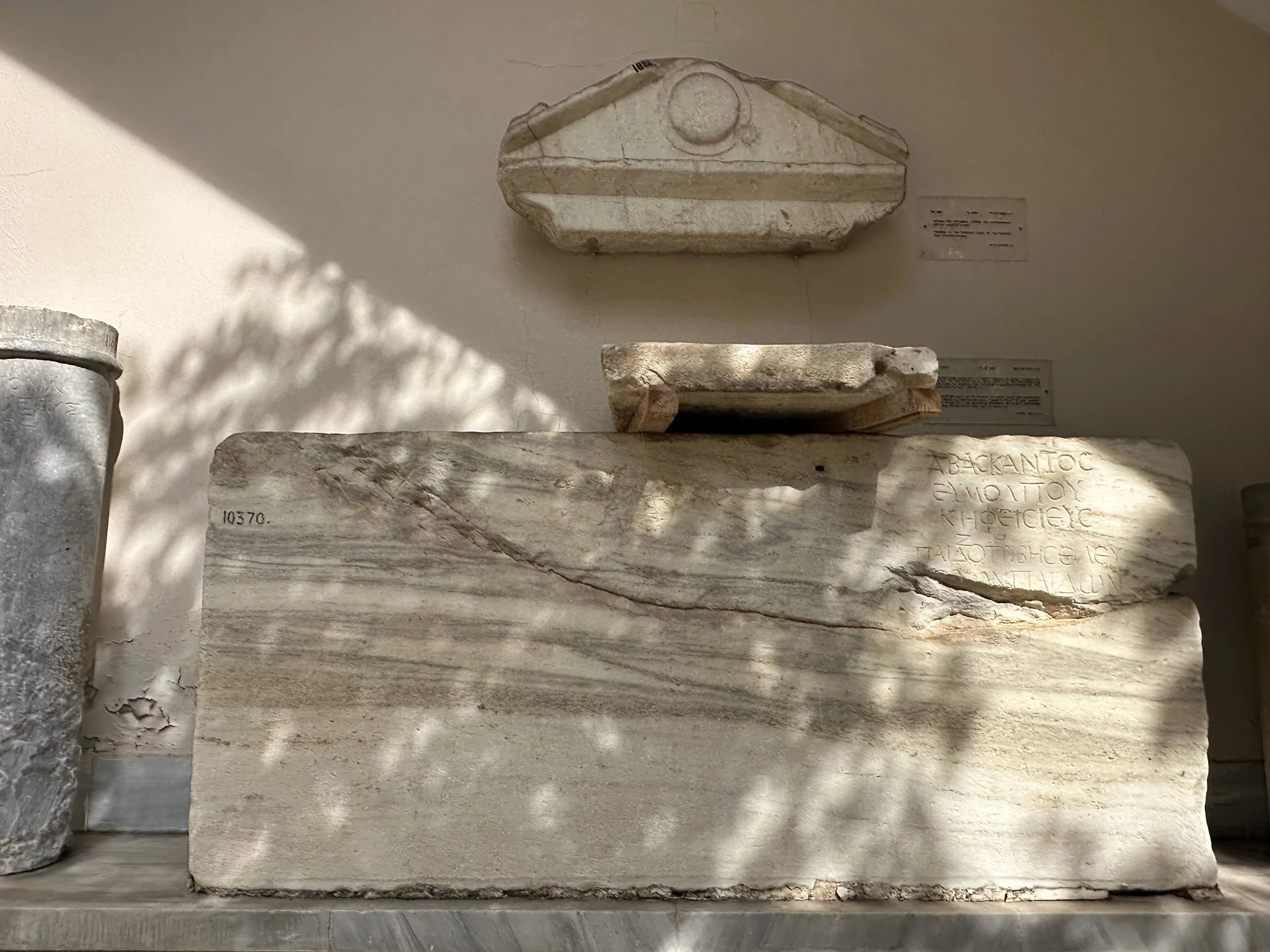
*”You’re such a baby.” She didn’t say that, of course. But she wouldn’t be wrong.
©2026, Pedro de Alcantara