Français | Deutsch

Français/Deutsch

Version françaiseAuf deutsch

Search This Site

To open PDF files, you will need Adobe Acrobat Reader.

Click here to download Acrobat for free!

Powered by Squarespace
View Pedro de Alcantara's profile on LinkedIn
Join My Email List
Sign up today!

* required

*


*


Email Marketing by VerticalResponse

Welcome to my cyberhome!

My blog is directly below. In it you'll find tips for musicians and for writers, book recommendations, and much more. Elsewhere on this site you can visit my library or read original articles and essays and materials about the Alexander Technique. Enjoy your visit and come back often!

Catalog of Blog Entries

Sunday
Jul042010

The Oppositional Principle in Music, Part 7: Masters & God(s)

The Oppositional Principle has had many adherents over the decades and centuries. Here’s how the playing of Johann Sebastian Bach was described in his lifetime.

"At the clavichord Bach is virtually still. He plays effortlessly, the movements of his fingers 'hardly perceptible.' Those fingers not in action remain motionless, 'quietly in position.' The rest of his body takes even '[less] part in his playing.' His hands do not contort or register any strain even in the most difficult passages. Bach plays expressively but his body expresses nothing." (Quoted by David Yearsley in Bach and the Meaning of Counterpoint.)

The bad news is that there are no YouTube clips of Bach playing the clavichord. The good news is that there are multiple clips of someone who corresponds to the above description of Bach.

I’m going to let Chick Corea (a master of the Oppositional Principle) introduce the guy in question. There are masters and there are gods . . . most musicians would agree that Art Tatum is a god. Well, no. Art Tatum is God.

In my next post I'll make a detailed study of his playing.

Saturday
Jun192010

The Oppositional Principle in Music, Part 6: Samer Totah and Kenneth Snelson, Masters of Balance

Recently I’ve been writing about what I call the Oppositional Principle for musicians—the idea that you may be able to play, sing, or conduct better if you keep your body relatively still, moving little beyond the needed gestures of your technique. The still body can condense and distribute energy more powerfully than the moving body.

It all depends on how you do it, of course!

Your stillness ought to be the result of many tensions brought to balance, like a Kenneth Snelson sculpture in which multiple forces in multiple dimensions all contribute to the overall stability of the structure. If you organize your forces in this way, then music will “charge you up.” The fluid energies of music will oppose your stable forces, and music itself will come through condensed and powerful.

After you visit Snelson’s beautiful website, come back here and watch Samer Totah, a great oud player who focuses his movements where they can carry the greatest power.


Thursday
Jun102010

A musician's freedom and wellbeing

My book INTEGRATED PRACTICE: COORDINATION, RHYTHM & SOUND is in production at the Oxford University Press in New York. Here's a very brief description of the book's main points.

A musician's freedom and wellbeing come from many sources. To be a musician is to “speak music.” When you have something to say and when you know how to say it, your gestures and sounds become both expressive and free. Understanding the language of music, then, is essential for your health. The key to mastering any language is rhythm. INTEGRATED PRACTICE contains an in-depth study of rhythm in music and in coordination, and it presents dozens of exercises to help you infuse your gestures and musical phrases with rhythmic energy.

Another aspect of your wellbeing is the balance between structure and inventiveness. Music, for instance, is based on predictable grids of chords, scales, and time signatures, and yet your music-making ought to be unpredictable and fluid. INTEGRATED PRACTICE shows you how to establish an imaginative dialogue between the relatively inflexible structure of music and your own individual style as a singer, instrumentalist, or conductor.

Most sounds contain multiple vibrations or partials, which together form the harmonic series—an acoustic phenomenon that determines timbre, consonance, dissonance, and much else beside. Knowing how to sense the partials’ shimmering vibrations and how to maximize them will help you make big sounds with little muscular effort, thanks to the power of resonance. INTEGRATED PRACTICE covers the harmonic series in detail and offers many exercises to release your innermost vibrations.

Much as you can improvise a last-minute dinner for six friends, you can use the skills of improvisation—and its creative frame of mind—to solve musical and technical problems. INTEGRATED PRACTICE includes novel approaches to improvisation as a sort of lifestyle, with exercises that you can apply to daily practice, rehearsing, and performing across the entire repertory.

INTEGRATED PRACTICE has a dedicated website with dozens of video and audio clips demonstrating the book’s exercises.


Monday
May172010

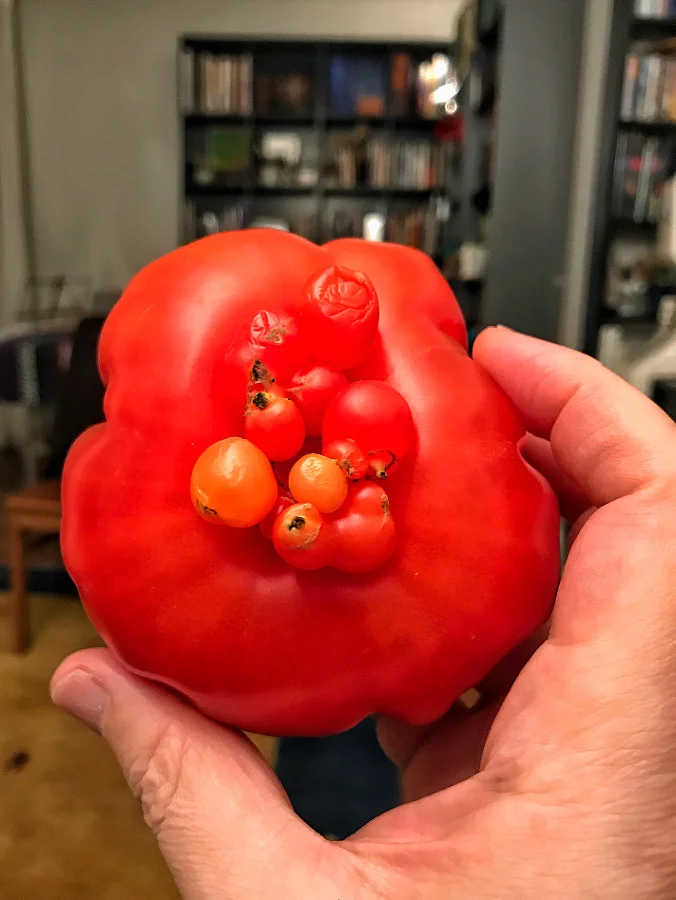
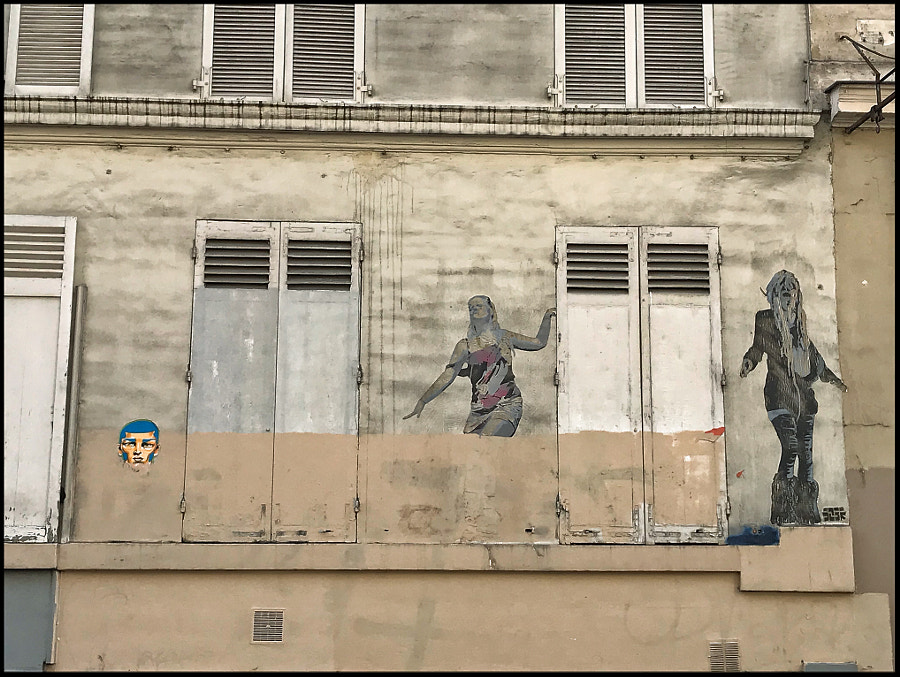
Elsewhere Photojournal XIII: Have you seen this guy?

Get the flash player here: http://www.adobe.com/flashplayer
Monday
May032010

The Oppositional Principle in Music, Part 5: Ivry Gitlis, Devilish Violinist

What I’ve been calling the oppositional principle in music is a way of singing, playing, or conducting in which the musician moves relatively little beyond the composition’s (or improvisation’s) immediate technical needs. Like all concepts, this can be easily misunderstood. I don’t think it’s good for you to be inert, passive, rigid, stiff, boring, afraid, or self-conscious! Instead I advocate a steady presence, like a bouncer at a nightclub who stands so confidently by the door that no one even tries to sneak past him. Call it “latent power” if you will. You can achieve it by distributing your physical tensions throughout the whole body from head to toe; firming up your spine, all the way from the skull to the coccyx; and pointing some of your energies toward the floor (as if anchoring yourself) and some toward the ceiling (as if unmooring  your inner Zeppelin). In other words, you “think up and down” at the same time.

You can give extraordinary, extravagant, intense, intoxicating performances in this way: the body doesn’t move, but the music soars! Watch the violinist Ivry Gitlis playing  Camille Saint-Saëns’s “Introduction and Rondo Capriccioso” without losing his anchored feet and legs, without throwing his head about, and without huffing and puffing. It’s the music that goes crazy, as well it should!

Thursday
Apr152010

The Oppositional Principle in Music, Part 4: Young & Old

What I've been calling the oppositional principle in music is a way of singing, playing, or conducting in which the perforer moves relatively little, instead letting the music move through him or her and on to the public. In recent posts we saw Louis Armstrong, Charlie Parker, Dizzie Gillespie, and an entire choir of male singers perform while keeping themselves quite still on stage. Today I'd like you to watch two different pianists demonstrating the approach: a very young Ahmad Jahmal and a not-so-young Mieczyslaw Horszowski (who was still playing the piano after his hundredth birthday). Jamal and Horszowski move their bodies only a bit here and there. They produce magically sweet sounds at the piano. And every one of the notes they play has a clarity of intention that make the notes "speak" as if coming directly out of the piano.

These two great artists show that the oppositional principle knows no boundaries: you can embody it if you're white or black, young or old, a cool cat or maestro. What's also interesting is that by embracing an universal principle you'll remain a unique individual; Jahmal and Horszowski are completely different from each other, even though they're very similar! I'll go on a limb here and state that only by embracing universal and timeless principles can you really fulfill your individual mission on this planet.